 ChipApex | Global Electronic Components Supplier

SEARCH
Search Product
Search Post
— IC芯片 | 连接器 | 传感器 | 被动器件 —
Search productSearch post
— IC芯片 | 连接器 | 传感器 | 被动器件 —
Consult the customer manager about the wholesale price.
consultation hotline:86-132-6715-2157
email:[email protected]
Contact the product manager for consultation. One-stop consultation is available.
Do you want a lower wholesale price? Please send us your inquiry and we will reply immediately.
The CD74FCT574CTQM is an octal edge-triggered D-type flip-flop with three-state outputs manufactured by Harris Corporation. It belongs to the FCT logic series and utilizes BICMOS technology. The device features a 20-SSOP package with a width of 3.90mm. It operates within a supply voltage range of 4.75V to 5.25V and supports a temperature range from -40°C to +85°C. Key electrical parameters include a propagation delay of 5.2ns, high-level output current of -32mA, and low-level output current of 64mA. It contains eight input lines and three-state output lines.
Verify the manufacturer designation as Harris Corporation for this specific part number, noting that Texas Instruments also produces similar FCT devices under different prefixes. Confirm the 20-SSOP package dimensions match the design footprint requirements. Ensure the operating temperature range meets the environmental specifications of the target application. Check RoHS compliance status through official documentation before procurement.
Select this component when an octal register with three-state outputs is required for bus-oriented architectures. The FCT series offers speed comparable to LS TTL while maintaining CMOS noise immunity. Consider the 5.2ns propagation delay for timing analysis in high-speed digital designs. The wide output drive capability supports moderate capacitive loads typical in system interconnects.
This device is part of the CY74FCT574T family of octal D-type flip-flops. It shares functional similarities with other FCT series registers but is distinguished by its Harris Corporation manufacturing origin and specific SSOP packaging. The component serves as a standard logic element for data storage and transfer in commercial and industrial electronic systems.
The CD74FCT574CTQCT is a pin-compatible alternative from Texas Instruments offering identical logical functionality and electrical characteristics. Verify package tolerance alignment between SSOP variants from different manufacturers before substitution.
The device uses positive edge triggering to capture input data on the rising edge of the clock signal.
No, the outputs are non-inverting and feature three-state control for bidirectional bus operations.
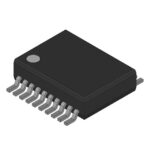 CD74FCT574CTQM

The activity of extra discounts on wholesale prices is in full swing…
Please fill in your contact information and we will send you the latest wholesale price list.





