 ChipApex | Global Electronic Components Supplier

SEARCH
Search Product
Search Post
— IC芯片 | 连接器 | 传感器 | 被动器件 —
Search productSearch post
— IC芯片 | 连接器 | 传感器 | 被动器件 —
Consult the customer manager about the wholesale price.
consultation hotline:86-132-6715-2157
email:[email protected]
Contact the product manager for consultation. One-stop consultation is available.
Do you want a lower wholesale price? Please send us your inquiry and we will reply immediately.
The CD74HC173EX is a quad D-type edge-triggered flip-flop manufactured by Harris Corporation, belonging to the HC-CMOS logic family. It features four independent D-type flip-flops with positive-edge triggering and true outputs. The device supports a supply voltage range of 2V to 6V and operates within a temperature range of -55°C to 125°C. It is housed in a 16-pin plastic dual in-line package (PDIP). Key electrical parameters include a maximum operating frequency of 20 MHz at nominal supply, a maximum output current of 6 mA, and a load capacitance of 50 pF.
Verify component authenticity through official manufacturer channels or authorized distributors. Confirm that the part number matches the specific Harris Corporation designation. Check for compliance with relevant environmental standards as indicated in the datasheet. Ensure handling procedures adhere to electrostatic discharge precautions for CMOS devices. Review technical specifications against application requirements before procurement.
Select this component when designing circuits requiring multiple synchronized data storage elements with wide voltage tolerance. Consider the HC series characteristics for compatibility with standard logic families. Evaluate the PDIP package suitability for through-hole mounting requirements. Assess thermal performance capabilities given the extended industrial temperature range. Verify interface timing constraints against the specified propagation delay parameters.
This component belongs to the 74HC logic family, representing high-speed CMOS technology developed for general-purpose digital applications. Harris Corporation produced this variant as part of their comprehensive line of compatible logic integrated circuits. The device maintains pinout compatibility with industry-standard equivalents while offering enhanced performance characteristics typical of the HC series architecture.
Compatible substitutes include Texas Instruments SN74HC173N and Intersil/Maxim IC74HC173 variants. These alternatives maintain identical logical functionality and pin configuration. Verify package dimensions and electrical specifications match original requirements. Ensure replacement parts meet the same temperature and voltage operating ranges.
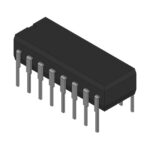 CD74HC173EX

The activity of extra discounts on wholesale prices is in full swing…
Please fill in your contact information and we will send you the latest wholesale price list.






