 ChipApex | Global Electronic Components Supplier

SEARCH
Search Product
Search Post
— IC芯片 | 连接器 | 传感器 | 被动器件 —
Search productSearch post
— IC芯片 | 连接器 | 传感器 | 被动器件 —
Consult the customer manager about the wholesale price.
consultation hotline:86-132-6715-2157
email:[email protected]
Contact the product manager for consultation. One-stop consultation is available.
Do you want a lower wholesale price? Please send us your inquiry and we will reply immediately.
The CD74HC377PW is a high-speed CMOS octal D-type flip-flop manufactured by Texas Instruments. It features eight independent D-type flip-flops with a common clock and data enable input, packaged in a 20-TSSOP (0.173", 4.40mm Width) surface-mount package. The device operates within a supply voltage range of 2V to 6V. Key electrical parameters include a propagation delay of 160 ns, a high-level output current of -5.2 mA, and a low-level output current of 5.2 mA. It supports through-hole or surface-mount installation styles depending on the specific variant, with an operating temperature range typically spanning from -40°C to +85°C.
Verify the exact package dimensions and pinout against the official CD74HC377 datasheet before integration. Confirm that the 20-TSSOP footprint matches your PCB layout requirements. Ensure supply voltage levels remain within the specified 2V to 6V range during operation. Check for any specific handling precautions related to static-sensitive CMOS devices during assembly.
Select this component when an octal D-type flip-flop with a shared clock and enable function is required. The HC series offers significant power reduction compared to LSTTL while maintaining compatible speeds. Consider the TSSOP package for space-constrained surface-mount designs. Verify compatibility with existing logic families if interfacing with TTL-level inputs, noting that HC inputs are not TTL-compatible without level shifting.
The CD74HC377 belongs to Texas Instruments' SN74HC and CD74HC logic families, which are designed for high-speed digital applications. It is part of a broader family of octal flip-flops, including variants like the SN74HC377 and CD74HCT377. These components are widely used in general-purpose logic ICs for memory storage and data transfer operations in consumer electronics and industrial control systems.
No, the CD74HC377 features a buffered clock (CP) that is common to all eight flip-flops, allowing them to be loaded simultaneously.
The Data Enable input controls whether the flip-flops accept data. When enabled, all flip-flops load their respective D-input states on the active clock edge.
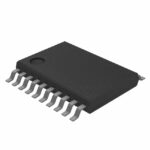 CD74HC377PW

The activity of extra discounts on wholesale prices is in full swing…
Please fill in your contact information and we will send you the latest wholesale price list.





