 ChipApex | Global Electronic Components Supplier

SEARCH
Search Product
Search Post
— IC芯片 | 连接器 | 传感器 | 被动器件 —
Search productSearch post
— IC芯片 | 连接器 | 传感器 | 被动器件 —
Consult the customer manager about the wholesale price.
consultation hotline:86-132-6715-2157
email:[email protected]
Contact the product manager for consultation. One-stop consultation is available.
Do you want a lower wholesale price? Please send us your inquiry and we will reply immediately.
The CD74HC534E is a high-speed CMOS logic octal positive-edge-triggered inverting D-type flip-flop with 3-state outputs manufactured by Texas Instruments. It operates within a supply voltage range of 2 V to 6 V and supports a maximum frequency of 28 MHz at nominal voltage. The device features a propagation delay of up to 35 ns and provides output currents of ±7.8 mA. It is housed in a 20-pin PDIP package, measuring 24.33 mm in length, and functions reliably across an extended temperature range from -55 °C to +125 °C.
Verify the specific ordering suffix against official Texas Instruments documentation to confirm package type and environmental compliance. Ensure the selected variant matches the required PDIP configuration and operating temperature specifications. Cross-reference the manufacturer part number with authorized distributors to validate authenticity and traceability before procurement.
Select this component when designing circuits requiring octal parallel data retention with inverted outputs. The 3-state feature allows direct connection to shared data buses without external buffering. Consider the 2 V to 6 V operating range for compatibility with various logic families. Evaluate the 35 ns propagation delay against system timing requirements to ensure adequate setup and hold times are met during operation.
This device belongs to the Texas Instruments CD74HC series of high-speed CMOS logic components. The HC designation indicates compatibility with standard 74HC logic levels while offering improved speed over older variants. As an octal flip-flop, it consolidates multiple sequential elements into a single package, reducing board space compared to discrete solutions. The series supports robust performance in industrial and commercial environments.
Consult official substitution guides for equivalent octal D-type flip-flops with 3-state outputs. Verify pinout compatibility and electrical parameter alignment before replacing the component. Ensure that any substitute maintains the same triggering edge and output inversion characteristics to preserve circuit functionality.
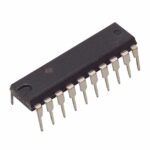 CD74HC534E

The activity of extra discounts on wholesale prices is in full swing…
Please fill in your contact information and we will send you the latest wholesale price list.





