 ChipApex | Global Electronic Components Supplier

SEARCH
Search Product
Search Post
— IC芯片 | 连接器 | 传感器 | 被动器件 —
Search productSearch post
— IC芯片 | 连接器 | 传感器 | 被动器件 —
Consult the customer manager about the wholesale price.
consultation hotline:86-132-6715-2157
email:[email protected]
Contact the product manager for consultation. One-stop consultation is available.
Do you want a lower wholesale price? Please send us your inquiry and we will reply immediately.
The CD74HCT374M is an octal D-type flip-flop manufactured by Harris Corporation, belonging to the 74HCT logic series. It features a single element with eight bits per element, utilizing positive edge triggering for data capture. The device operates within a supply voltage range of 4.5V to 5.5V and supports a maximum clock frequency of 60 MHz. It exhibits a typical propagation delay of 33ns at 4.5V with a 50pF load. The outputs are three-state and non-inverting, capable of sourcing and sinking 6mA. Packaged in a 20-SOIC surface-mount format, it functions reliably across an operating temperature range of -55°C to 125°C.
Verify manufacturer authenticity as Harris Corporation was acquired; confirm current production status through authorized distributors. Check datasheet revisions for pinout consistency with legacy designs. Ensure compliance with RoHS directives if required by target application standards. Validate supply chain sources to avoid counterfeit components affecting reliability.
Select this component when an octal D-latch with three-state outputs is required in a surface-mount package. Compare propagation delays against system timing requirements to ensure signal integrity. Consider alternative packages like DIP or TSSOP if board space constraints differ. Verify input threshold voltages match the driving logic family to prevent undefined states during operation.
This part belongs to the widely adopted 74HCT logic family, bridging HC CMOS performance with TTL compatibility. It serves as a fundamental building block for sequential logic design. The SOIC-20 package offers a balance between pin count and board area efficiency. Its positive edge-triggered nature makes it distinct from level-sensitive latches, providing precise synchronization capabilities in synchronous digital circuits.
Direct substitutes include Texas Instruments' CD74HCT374M and SN74HCT374M. These alternatives maintain identical logical functionality and pin configurations. Verify electrical parameters such as output current and propagation delay to ensure seamless integration into existing designs without circuit modification.
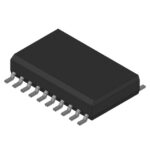 CD74HCT374M

The activity of extra discounts on wholesale prices is in full swing…
Please fill in your contact information and we will send you the latest wholesale price list.





