 ChipApex | Global Electronic Components Supplier

SEARCH
Search Product
Search Post
— IC芯片 | 连接器 | 传感器 | 被动器件 —
Search productSearch post
— IC芯片 | 连接器 | 传感器 | 被动器件 —
Consult the customer manager about the wholesale price.
consultation hotline:86-132-6715-2157
email:[email protected]
Contact the product manager for consultation. One-stop consultation is available.
Do you want a lower wholesale price? Please send us your inquiry and we will reply immediately.
The CD74HCT377M96 is an octal D-type flip-flop manufactured by Texas Instruments, belonging to the 74HCT logic series. It features positive-edge triggering and non-inverting outputs within a single package. The device operates on a supply voltage range of 4.5V to 5.5V with a maximum static current of 8 µA. It supports a clock frequency up to 50 MHz and exhibits a maximum propagation delay of 38 ns at 4.5V with 50pF load. Output drive capability is rated at 4 mA for both high and low states. The component is housed in a 20-SOIC surface-mount package and functions across an extended temperature range from -55°C to +125°C.
Verify the specific suffix M96 against the manufacturer's official datasheet to confirm pinout compatibility and electrical characteristics match the design requirements. Ensure that the 20-SOIC package dimensions align with the PCB footprint specifications. Confirm RoHS compliance status and moisture sensitivity level ratings prior to assembly to prevent soldering defects during reflow processes.
Select this component when designing systems requiring octal storage elements with fast switching speeds and standard TTL interface compatibility. The HCT series ensures logical level matching with other 74HCT devices, simplifying system integration. Consider the 50 MHz clock limit and 38 ns propagation delay for timing analysis to ensure signal integrity in high-frequency applications without additional buffering requirements.
This part belongs to the Texas Instruments CD74HCT377 family, which includes variations such as CD74HCT377M and CD74HCT377N. These variants share identical functional specifications but differ in packaging types, including SOIC and DIP configurations. The M96 suffix specifically denotes the surface-mount SOIC variant optimized for automated assembly processes in modern electronic manufacturing environments.
Direct substitutes include CD74HCT377M and CD74HCT377M96 equivalents from the same manufacturer. Cross-brand alternatives like SN74HCT377 may require verification of pinout and electrical parameter alignment.
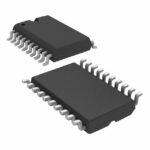 CD74HCT377M96

The activity of extra discounts on wholesale prices is in full swing…
Please fill in your contact information and we will send you the latest wholesale price list.






