 ChipApex | Global Electronic Components Supplier

SEARCH
Search Product
Search Post
— IC芯片 | 连接器 | 传感器 | 被动器件 —
Search productSearch post
— IC芯片 | 连接器 | 传感器 | 被动器件 —
Consult the customer manager about the wholesale price.
consultation hotline:86-132-6715-2157
email:[email protected]
Contact the product manager for consultation. One-stop consultation is available.
Do you want a lower wholesale price? Please send us your inquiry and we will reply immediately.
The CD74HCT564MG4 is an octal positive-edge-triggered D-type flip-flop manufactured by Texas Instruments. It belongs to the HCT logic series, featuring TTL-compatible inputs and CMOS outputs. The device provides eight independent circuits within a single package, utilizing a 20-pin SOIC surface-mount enclosure. It operates with a supply voltage range of 4.5 V to 5.5 V and supports a propagation delay of 35 ns. The outputs are three-state capable, allowing for bus-oriented connections. The component is rated for operation from -55°C to +125°C and includes inverting polarity characteristics.
Verify the specific suffix 'G4' against the manufacturer's current product status documentation to confirm availability and compliance with RoHS standards. Ensure that the SOIC-20 package dimensions match the target PCB footprint requirements. Cross-reference the datasheet revision history for any updates to electrical parameters or recommended operating conditions prior to final design approval.
Select this component when an octal storage solution with high-speed operation is required. The HCT series selection ensures compatibility with TTL logic levels while maintaining CMOS power efficiency. Consider the three-state output feature if the design requires shared data lines. Verify that the thermal performance within the -55°C to +125°C range meets the environmental constraints of the intended application environment.
This part is a member of the Texas Instruments CD74HCT family, designed for high-speed CMOS logic applications. It serves as a fundamental building block for sequential logic circuits requiring multiple storage elements. The MG4 designation indicates a lead-free, halogen-free variant compliant with specific environmental directives, packaged in a standard small-outline integrated circuit format suitable for automated surface-mount assembly processes.
Consult official substitution guides for equivalent octal flip-flops within the same logic family. Verify pinout compatibility and electrical parameter alignment before replacing the component. Generic replacements may differ in propagation delay or output drive strength.
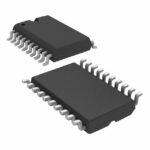 CD74HCT564MG4

The activity of extra discounts on wholesale prices is in full swing…
Please fill in your contact information and we will send you the latest wholesale price list.






