 ChipApex | Global Electronic Components Supplier

SEARCH
Search Product
Search Post
— IC芯片 | 连接器 | 传感器 | 被动器件 —
Search productSearch post
— IC芯片 | 连接器 | 传感器 | 被动器件 —
Consult the customer manager about the wholesale price.
consultation hotline:86-132-6715-2157
email:[email protected]
Contact the product manager for consultation. One-stop consultation is available.
Do you want a lower wholesale price? Please send us your inquiry and we will reply immediately.
The CD74HCT574EE4 is an octal edge-triggered D-type flip-flop manufactured by Texas Instruments. It features three-state outputs and belongs to the HCT logic series, ensuring compatibility with TTL voltage levels. The device operates within a supply voltage range of 4.5 V to 5.5 V. It is housed in a 20-pin SOIC package. Key electrical parameters include a maximum propagation delay of 33 ns at 4.5 V with 50 pF load, and output drive currents of 6 mA for both high and low states. The static current consumption is typically 8 µA.
Verify the specific suffix 'E4' corresponds to the lead-free RoHS-compliant variant as defined by Texas Instruments documentation. Confirm that the SOIC-20 package dimensions match the target PCB footprint requirements. Ensure the operating temperature range aligns with the intended environmental conditions. Cross-reference the manufacturer part number against official distributors to confirm availability and authenticity before finalizing procurement orders.
Select this component when an octal register with three-state capability is required for bus architectures. The HCT series selection ensures voltage level compatibility with existing TTL logic families without additional level shifting. Consider the 20-pin SOIC package for surface-mount assembly constraints. Evaluate the 33 ns propagation delay against system timing requirements to ensure signal integrity at the desired clock frequencies.
This component is part of the broader 74HCT574 family of octal D-type flip-flops. It shares functional similarities with other variants such as the SN74HC574NE4 and CD74HCT574PWR, differing primarily in package type and specific manufacturing revisions. The EE4 designation indicates a specific tape-and-reel or tube packaging option within the standard product line offered by Texas Instruments for industrial and commercial applications.
Public confirmed substitute part numbers include CD74HCT574PWRE4 and CD74HCT574PWRG4. These alternatives offer identical logical functionality but utilize different package formats such as TSSOP. Verify pin-to-pin compatibility and package dimensions before substituting to ensure mechanical fit on the printed circuit board.
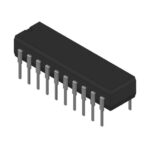 CD74HCT574EE4

The activity of extra discounts on wholesale prices is in full swing…
Please fill in your contact information and we will send you the latest wholesale price list.





