ChipApex | Global Electronic Components Supplier
SEARCH
Search Product
Search Post
— IC芯片 | 连接器 | 传感器 | 被动器件 —
Search productSearch post
— IC芯片 | 连接器 | 传感器 | 被动器件 —
Consult the customer manager about the wholesale price.
consultation hotline:86-132-6715-2157
email:[email protected]
Contact the product manager for consultation. One-stop consultation is available.
Do you want a lower wholesale price? Please send us your inquiry and we will reply immediately.
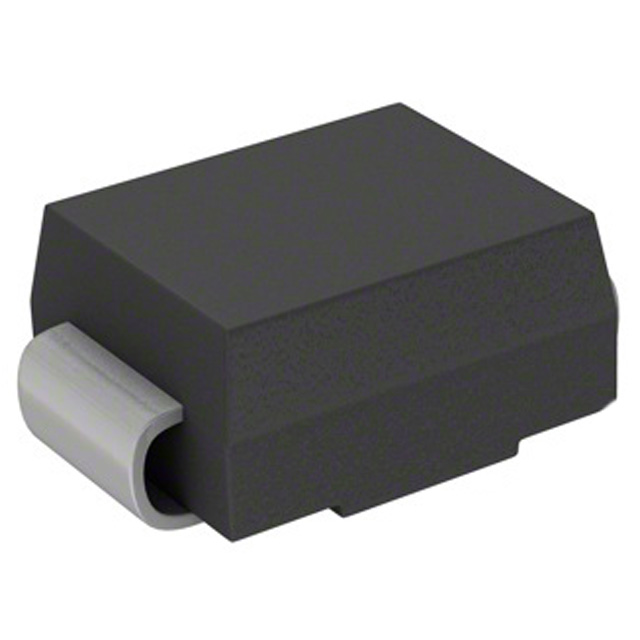
The CDBB360-HF is a Schottky Barrier Rectifier manufactured by Comchip Technology. It features a bidirectional configuration with a maximum repetitive peak reverse voltage of 60V and an average forward rectified current of 1A. The device utilizes a glass passivated chip construction for enhanced reliability and operates within a junction temperature range of -55°C to +175°C. Packaged in the SOD-123FL format, it is designed for surface mount applications requiring low forward voltage drop and high surge current capability.
Verify the specific datasheet revision and RoHS compliance status directly with Comchip Technology before procurement. Confirm that the SOD-123FL package dimensions match your PCB footprint requirements. Ensure that the 60V reverse voltage rating is sufficient for your circuit's peak inverse voltage conditions. Check for any automotive qualification certifications if the application requires AEC standards.
Select this component when a bidirectional Schottky rectifier is required in a compact surface mount package. The 60V rating suits low-voltage DC power paths. Consider the 1A average current limit for load matching. The wide operating temperature range makes it suitable for environments with thermal fluctuations. Compare leakage current specifications against other bidirectional options if signal integrity is critical.
Comchip Technology specializes in discrete semiconductors, including diodes and rectifiers. The CDBB360-HF belongs to their Schottky Barrier Rectifier series, which emphasizes efficiency and reliability. This product line targets industries demanding robust performance in space-constrained designs. The manufacturer focuses on providing solutions for automotive and industrial sectors through advanced packaging technologies.
The CDBB360-HF is a bidirectional Schottky Barrier Rectifier, meaning it can conduct current in both directions when forward-biased relative to its terminals.
The maximum operating junction temperature for the CDBB360-HF is +175°C, allowing for operation in high-temperature environments.
 CDBB360-HF
The activity of extra discounts on wholesale prices is in full swing…
Please fill in your contact information and we will send you the latest wholesale price list.