 ChipApex | Global Electronic Components Supplier

SEARCH
Search Product
Search Post
— IC芯片 | 连接器 | 传感器 | 被动器件 —
Search productSearch post
— IC芯片 | 连接器 | 传感器 | 被动器件 —
Consult the customer manager about the wholesale price.
consultation hotline:86-132-6715-2157
email:[email protected]
Contact the product manager for consultation. One-stop consultation is available.
Do you want a lower wholesale price? Please send us your inquiry and we will reply immediately.
The CDC303DR is a low skew clock driver manufactured by Texas Instruments, designed for high-speed digital signal distribution. It operates within a supply voltage range of 1.65 V to 5.25 V and supports maximum output frequencies up to 400 MHz. The device features CMOS input and LVCMOS/LVTTL output types, ensuring compatibility with various logic families. Packaged in a compact SOIC-16 surface-mount format, it functions reliably across an industrial temperature range from -40°C to +85°C. This component is engineered for efficient clock buffering and driving applications requiring precise timing integrity.
Verify the specific suffix 'DR' corresponds to the tape-and-reel packaging configuration required for your assembly process. Confirm that the SOIC-16 package dimensions align with your PCB footprint design rules. Ensure the operating temperature range meets your environmental specifications. Cross-reference the datasheet for pinout compatibility if replacing existing components. Validate RoHS compliance status for regulatory adherence in your target market.
Choose this component when low skew is critical for maintaining signal integrity in high-frequency applications. Consider the supply voltage requirements to ensure compatibility with your system's power rails. Evaluate the output drive capability against the load capacitance of your destination devices. Assess the package size constraints for space-sensitive designs. Verify the input logic levels match your source clock signals.
The CDC303DR belongs to Texas Instruments' family of clock drivers and buffers, which are essential for managing timing signals in complex electronic systems. These components facilitate the distribution of reference clocks to multiple downstream devices while minimizing timing errors. The DR suffix indicates a specific reel-based packaging option suitable for automated surface-mount manufacturing processes.
Check for direct cross-reference part numbers from Texas Instruments or other manufacturers offering equivalent low-skew clock drivers in SOIC-16 packages. Verify functional compatibility regarding supply voltage, output logic types, and maximum frequency specifications before substitution.
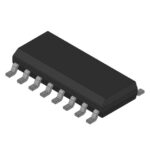 CDC303DR

The activity of extra discounts on wholesale prices is in full swing…
Please fill in your contact information and we will send you the latest wholesale price list.






