 ChipApex | Global Electronic Components Supplier

SEARCH
Search Product
Search Post
— IC芯片 | 连接器 | 传感器 | 被动器件 —
Search productSearch post
— IC芯片 | 连接器 | 传感器 | 被动器件 —
Consult the customer manager about the wholesale price.
consultation hotline:86-132-6715-2157
email:[email protected]
Contact the product manager for consultation. One-stop consultation is available.
Do you want a lower wholesale price? Please send us your inquiry and we will reply immediately.
The CDCLVC1108PWR is a low jitter, 1:8 LVCMOS fan-out clock buffer manufactured by Texas Instruments. It operates within a supply voltage range of 2.3 V to 3.6 V and supports maximum input and output frequencies of 250 MHz. The device features a propagation delay of up to 2 ns and utilizes an LVCMOS input/output configuration. It is housed in a 16-TSSOP package with a width of 4.40 mm. The component is designed for surface mount installation and functions reliably across an operating temperature range of -40°C to +85°C.
Verify the specific ordering suffix against the manufacturer's official documentation to confirm the exact packaging type, such as Tape & Reel or Cut Tape. Ensure the selected variant matches the required quantity per reel or cut tape specifications for the intended manufacturing process. Cross-reference the part number with the latest datasheet to confirm pinout compatibility and electrical characteristics before finalizing procurement orders.
Select this component when a 1:8 LVCMOS clock distribution solution is required with a maximum frequency of 250 MHz. It is suitable for designs requiring a supply voltage between 2.3 V and 3.6 V. The 16-TSSOP package is appropriate for surface mount assembly. Consider the 2 ns propagation delay and LVCMOS interface requirements to ensure compatibility with the target system's timing and logic levels.
This component belongs to the CDCLVC11xx series of modular, high-performance, low-skew universal clock buffers from Texas Instruments. The series includes variants with different fan-out ratios ranging from 1:2 to 1:12. All devices in the family share similar performance characteristics, including low additive jitter and low skew, while maintaining pin-to-pin compatibility across different package options to facilitate design flexibility.
Compatible substitutes within the same family include CDCLVC1102, CDCLVC1104, CDCLVC1106, CDCLVC1110, and CDCLVC1112. These parts offer different output counts but maintain pin compatibility and similar electrical specifications. Verify that the alternative part's fan-out ratio meets the circuit requirements before substitution.
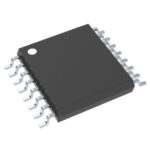 CDCLVC1108PWR

The activity of extra discounts on wholesale prices is in full swing…
Please fill in your contact information and we will send you the latest wholesale price list.





