 ChipApex | Global Electronic Components Supplier

SEARCH
Search Product
Search Post
— IC芯片 | 连接器 | 传感器 | 被动器件 —
Search productSearch post
— IC芯片 | 连接器 | 传感器 | 被动器件 —
Consult the customer manager about the wholesale price.
consultation hotline:86-132-6715-2157
email:[email protected]
Contact the product manager for consultation. One-stop consultation is available.
Do you want a lower wholesale price? Please send us your inquiry and we will reply immediately.
The CDCLVP110VFRG4 is a low-voltage clock buffer and driver manufactured by Texas Instruments. It provides a 2:10 fanout ratio, accepting differential inputs in HSTL or LVPECL formats and distributing them as LVPECL outputs. The device supports maximum frequencies up to 3.5 GHz with a supply voltage range of 2.375 V to 3.8 V. Packaged in a 32-LQFP (7x7 mm) case, it operates within an industrial temperature range of -40°C to +85°C. This component functions as a multiplexer-based fanout buffer designed for high-speed clock distribution applications requiring precise signal integrity.
Verify the specific ordering suffix 'G4' against the manufacturer's current datasheet to confirm lead-free status and RoHS compliance details. Ensure the package variant matches the required 32-LQFP dimensions (7x7 mm) for PCB footprint compatibility. Confirm that the operating temperature range of -40°C to +85°C meets the environmental requirements of the target application system.
Select this component when a 2:10 fanout is required with support for both HSTL and LVPECL inputs. Compare against the CDCLVP110MVFR if a different output configuration or pinout is needed. Ensure the system power supply can maintain stability within the 2.375 V to 3.8 V range to guarantee the 3.5 GHz maximum frequency performance without degradation.
This part belongs to the CDCLVP series of low-voltage clock drivers from Texas Instruments. It is functionally related to the CDCLVP110VFR, with the 'G4' suffix typically indicating a lead-free and RoHS-compliant version. It serves as a specialized solution for distributing high-frequency clocks in complex digital systems where multiple synchronized outputs are necessary.
Check for direct substitutes like the CDCLVP110VFR, ensuring pinout and electrical specifications match. Verify if the CDCLVP111 offers compatible functionality with selectable input features if additional flexibility is required. Always validate thermal and electrical parameters against the original design constraints before substitution.
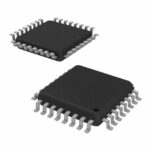 CDCLVP110VFRG4

The activity of extra discounts on wholesale prices is in full swing…
Please fill in your contact information and we will send you the latest wholesale price list.





