 ChipApex | Global Electronic Components Supplier

SEARCH
Search Product
Search Post
— IC芯片 | 连接器 | 传感器 | 被动器件 —
Search productSearch post
— IC芯片 | 连接器 | 传感器 | 被动器件 —
Consult the customer manager about the wholesale price.
consultation hotline:86-132-6715-2157
email:[email protected]
Contact the product manager for consultation. One-stop consultation is available.
Do you want a lower wholesale price? Please send us your inquiry and we will reply immediately.
The CDCLVP111RHBR is a low-voltage 1:10 LVPECL clock driver manufactured by Texas Instruments. It distributes one differential clock input pair to ten differential LVPECL output pairs with minimum skew, supporting frequencies up to 3.5 GHz. The device accepts CML, LVDS, LVPECL, and SSTL inputs and operates on a supply voltage range of 2.375 V to 3.8 V. It features selectable clock inputs via CLK_SEL, additive RMS jitter of typically 40 fs at 3.5 GHz, and propagation delay less than 350 ps. Packaged in a 32-VQFN (5x5 mm) exposed pad case, it is designed for driving 50-Ω transmission lines in high-performance clock distribution applications.
Verify the package type matches the required 32-VQFN (5x5 mm) footprint. Confirm that the supply voltage requirements align with the 2.375 V to 3.8 V operating range. Ensure the design supports LVPECL output levels and differential signaling standards. Check for RoHS compliance if environmental regulations apply to the specific manufacturing batch.
Select this component when a single differential clock source needs to drive ten LVPECL loads with minimal skew. It is suitable for systems requiring compatibility with multiple input standards including CML, LVDS, and SSTL. Consider the 32-VQFN package for space-constrained surface mount designs. Verify that the maximum frequency requirement does not exceed 3.5 GHz.
This part belongs to the CDCLVP111 series of low-voltage clock drivers. It is functionally similar to other 1:10 LVPECL buffers but offers specific input multiplexing capabilities. The RHBR suffix indicates the tape and reel packaging format. It serves as a fanout buffer for distributing clock signals in high-speed digital systems.
Pin-to-pin compatible alternatives include MC100LVEP111, ES6111, LVEP111, and PTN1111. Verify electrical parameters such as supply voltage and output current before substitution.
The CDCLVP111RHBR supports CML, LVDS, LVPECL, and SSTL input signal types.
The maximum operating frequency is 3.5 GHz.
It provides 10 differential LVPECL outputs from a single differential input pair.
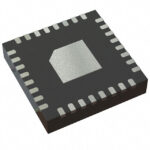 CDCLVP111RHBR

The activity of extra discounts on wholesale prices is in full swing…
Please fill in your contact information and we will send you the latest wholesale price list.





