 ChipApex | Global Electronic Components Supplier

SEARCH
Search Product
Search Post
— IC芯片 | 连接器 | 传感器 | 被动器件 —
Search productSearch post
— IC芯片 | 连接器 | 传感器 | 被动器件 —
Consult the customer manager about the wholesale price.
consultation hotline:86-132-6715-2157
email:[email protected]
Contact the product manager for consultation. One-stop consultation is available.
Do you want a lower wholesale price? Please send us your inquiry and we will reply immediately.
The CDCM1802RGTRG4 is a clock buffer and distribution device manufactured by Texas Instruments. It features a single circuit with a 1:2 input-to-output ratio, supporting both differential and single-ended signal paths. The component operates within a supply voltage range of 3V to 3.6V and supports a maximum frequency of 800 MHz. Input configurations include LVCMOS, LVPECL, and LVTTL, while outputs provide LVCMOS and LVPECL signals. It is housed in a 16-VQFN (3x3) package with an exposed pad and functions reliably across an operating temperature range of -40°C to +85°C.
Verify the specific ordering suffix RGTRG4 against official Texas Instruments documentation to confirm package type and tape-and-reel specifications. Ensure that the 16-VQFN exposed pad thermal requirements are addressed in the PCB layout design. Confirm RoHS compliance status through the manufacturer's current product information sheet before finalizing procurement orders.
Select this component when a 1:2 clock distribution function is required with mixed LVCMOS/LVPECL output capabilities. The 800 MHz frequency limit suits applications below this threshold. Verify that the 3V to 3.6V supply voltage aligns with the system power rails. Consider the 16-VQFN package dimensions if board space is constrained, noting the necessity for thermal management via the exposed pad.
This device belongs to the clock buffer and driver category within Texas Instruments' portfolio. It serves as a signal conditioning component for digital systems requiring reliable clock propagation. The 16-VQFN packaging allows for surface-mount integration in compact electronic designs. It complements other timing solutions by providing flexible input/output logic level translation.
Consult Texas Instruments application notes for direct pin-compatible alternatives within the CDCM series. Verify that any substitute part maintains the 800 MHz frequency specification and compatible LVCMOS/LVPECL output drive strengths. Check for identical package dimensions to ensure mechanical fit without redesigning the footprint.
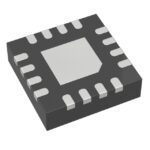 CDCM1802RGTRG4

The activity of extra discounts on wholesale prices is in full swing…
Please fill in your contact information and we will send you the latest wholesale price list.





