 ChipApex | Global Electronic Components Supplier

SEARCH
Search Product
Search Post
— IC芯片 | 连接器 | 传感器 | 被动器件 —
Search productSearch post
— IC芯片 | 连接器 | 传感器 | 被动器件 —
Consult the customer manager about the wholesale price.
consultation hotline:86-132-6715-2157
email:[email protected]
Contact the product manager for consultation. One-stop consultation is available.
Do you want a lower wholesale price? Please send us your inquiry and we will reply immediately.
The CDCUN1208LPRHBR is a clock buffer and distribution device manufactured by Texas Instruments. It features a 2:8 fanout ratio, accepting differential or single-ended inputs and providing eight corresponding outputs. The component supports HCSL, LVCMOS, and LVDS input/output logic levels. It operates within a supply voltage range of 1.7 V to 3.63 V and supports maximum frequencies up to 400 MHz. Designed for surface mount assembly, it is housed in a 32-VQFN package with an exposed pad (5x5 mm). The device functions reliably across an operating temperature range of -40°C to +85°C.
Verify the specific ordering suffix LPRHBR against the manufacturer's current datasheet to confirm tape and reel quantities and packaging specifications. Ensure compatibility with the target PCB footprint for the 32-VQFN exposed pad package. Confirm that the required operating temperature range of -40°C to +85°C aligns with the system environment constraints before finalizing procurement.
Select this component when a 2:8 clock distribution ratio is required with support for mixed-signal logic levels like LVDS and HCSL. The 400 MHz maximum frequency limit should be evaluated against the system clock requirements. Consider the 32-VQFN package size if board real estate is limited. Verify that the 1.7 V to 3.63 V supply voltage range matches the available power rails in the design.
This part belongs to the family of clock buffers and drivers designed for high-performance timing applications. It serves as a bridge between primary clock sources and downstream synchronous components. The device simplifies layout by providing multiple buffered outputs from a single source, reducing load capacitance on the reference oscillator.
Check for pin-compatible alternatives within the same Texas Instruments portfolio that offer similar 2:8 ratios and voltage ranges. Verify that any substitute maintains the same input/output logic level support (LVDS/HCSL/LVCMOS) and package dimensions to ensure mechanical interchangeability without redesigning the PCB.
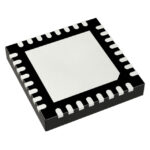 CDCUN1208LPRHBR

The activity of extra discounts on wholesale prices is in full swing…
Please fill in your contact information and we will send you the latest wholesale price list.






