 ChipApex | Global Electronic Components Supplier
SEARCH
Search Product
Search Post
— IC芯片 | 连接器 | 传感器 | 被动器件 —
Search productSearch post
— IC芯片 | 连接器 | 传感器 | 被动器件 —
Consult the customer manager about the wholesale price.
consultation hotline:86-132-6715-2157
email:[email protected]
Contact the product manager for consultation. One-stop consultation is available.
Do you want a lower wholesale price? Please send us your inquiry and we will reply immediately.
The CDM10V3XTSA1 is a fully integrated linear LED driver IC designed for 0-10 V dimming applications. It operates within an input voltage range of 11 V to 25 V and delivers a maximum output current of 10 mA. The device supports adjustable output voltage and features PWM dimming capabilities. It utilizes a Buck topology and functions at a working frequency of 1 kHz. The component is housed in a compact SOT-23-6 package, suitable for surface mount installation. It ensures reliable operation across a wide temperature range from -40°C to +105°C, with a maximum power dissipation of 130 mW.
Verify the lifecycle status before procurement, as this component may be marked as Not Recommended for New Designs (NRND). Confirm that the SOT-23-6 package and specific electrical parameters align with existing circuit designs. Ensure compatibility with the required 0-10 V control signals and operating voltage ranges. Check for alternative components if long-term supply stability is a critical requirement for the production timeline.
Select this component for space-constrained PCB layouts requiring a single-channel linear LED driver. It is appropriate for applications needing precise 0-10 V analog dimming control combined with PWM support. Consider the 10 mA output limit and 130 mW power dissipation when designing thermal management solutions. Ensure the input supply voltage remains within the specified 11 V to 25 V window for proper regulation.
This part belongs to the CDM10V series of flexible dimming controllers manufactured by Infineon Technologies. It is specifically engineered for LED lighting applications where compact size and integrated control are prioritized. The series includes variants with different pinouts or feature sets, but this specific model focuses on standard 0-10 V interface integration in a minimal footprint package.
Publicly confirmed substitute part numbers are not available in the provided documentation. Verify if other members of the CDM10 family, such as CDM10VD3XTSA1, offer compatible interfaces, though pinout differences may require schematic revision.
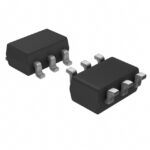 CDM10V3XTSA1
The activity of extra discounts on wholesale prices is in full swing…
Please fill in your contact information and we will send you the latest wholesale price list.





