 ChipApex | Global Electronic Components Supplier
SEARCH
Search Product
Search Post
— IC芯片 | 连接器 | 传感器 | 被动器件 —
Search productSearch post
— IC芯片 | 连接器 | 传感器 | 被动器件 —
Consult the customer manager about the wholesale price.
consultation hotline:86-132-6715-2157
email:[email protected]
Contact the product manager for consultation. One-stop consultation is available.
Do you want a lower wholesale price? Please send us your inquiry and we will reply immediately.
The TGS CG16M00000S001 is a surface-mount ceramic resonator from the CRAV series, designed for frequency control in electronic circuits. It operates at a nominal frequency of 16.000 MHz with a specified accuracy of ±0.5%. The component utilizes a 3731 type package, measuring 3.7mm in length, 3.1mm in width, and 1.2mm in height. It features two pads without built-in capacitance, requiring external circuitry for oscillator integration. The device is supplied in tape and reel packaging to support automated assembly processes.
Verify the specific frequency tolerance requirement against the datasheet specification of ±0.5% to ensure compatibility with system timing constraints. Confirm that the application circuit includes necessary external components, as this resonator lacks built-in capacitance. Ensure the PCB footprint matches the 3731 package dimensions of 3.7mm x 3.1mm x 1.2mm. Check for any specific reflow soldering profile recommendations provided by the manufacturer to maintain component integrity during assembly.
Select this component when a low-cost, small-form-factor frequency reference is required for 16 MHz applications. Consider the ±0.5% accuracy limit for systems sensitive to clock drift. The absence of internal capacitors allows designers to optimize load capacitance for precise frequency tuning. Evaluate the 3731 package size against available board space constraints compared to larger through-hole alternatives.
This part belongs to the TGS CRAV series of ceramic resonators, which are widely used in consumer electronics and industrial equipment. The series offers various frequency options in standardized SMD packages. The CG16M00000S001 specifically addresses the common need for 16 MHz clock signals in microprocessor-based systems, balancing performance with cost-effectiveness for mass production environments.
Cross-reference with other 16 MHz ceramic resonators in the 3731 package format. Verify equivalent electrical parameters including frequency stability and impedance characteristics. Ensure mechanical compatibility with existing PCB footprints before substitution.
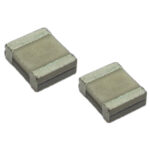 CG16M00000S001
The activity of extra discounts on wholesale prices is in full swing…
Please fill in your contact information and we will send you the latest wholesale price list.





