ChipApex | Global Electronic Components Supplier

SEARCH
Search Product
Search Post
— IC芯片 | 连接器 | 传感器 | 被动器件 —
Search productSearch post
— IC芯片 | 连接器 | 传感器 | 被动器件 —
Consult the customer manager about the wholesale price.
consultation hotline:86-132-6715-2157
email:[email protected]
Contact the product manager for consultation. One-stop consultation is available.
Do you want a lower wholesale price? Please send us your inquiry and we will reply immediately.
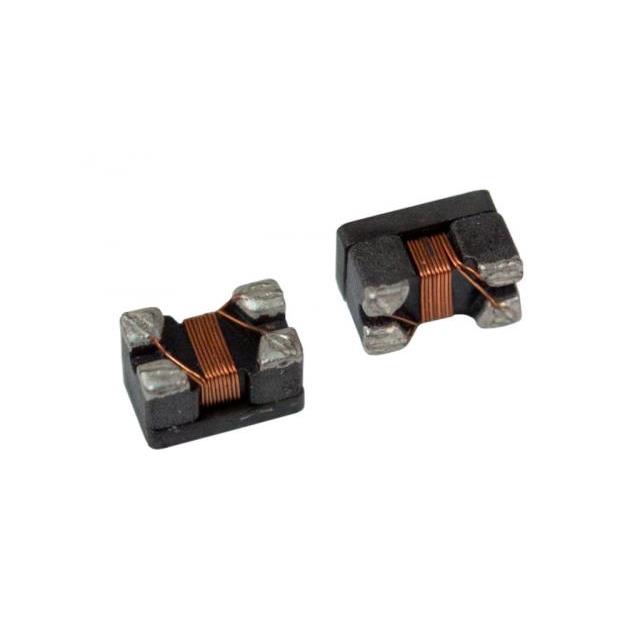
The CM1210B223R-1A is a surface-mount common mode choke manufactured by Laird-Signal Integrity Products. It features a 1210 (3225 metric) package with dimensions of 3.20mm x 2.50mm and a maximum height of 1.40mm. The component provides an inductance of 22 µH at 100 kHz and exhibits an impedance of 1.1 kOhms at 10 MHz. It supports a maximum rated current of 250mA with a maximum DC resistance (DCR) of 500mOhm. Designed for operation between -40°C and 125°C, it is classified as a two-line filter suitable for signal integrity applications.
Verify the specific suffix and revision level against the manufacturer's latest datasheet to ensure compatibility with current RoHS3 standards. Confirm that the 250mA current rating meets the operational requirements of the target circuit under all expected thermal conditions. Check for any obsolescence notices or lifecycle changes directly from Laird-Signal Integrity Products before finalizing procurement plans.
Select this component when designing circuits requiring common mode noise attenuation for high-speed signals within a 1210 package constraint. Ensure the 22 µH inductance value aligns with the frequency spectrum of the noise to be filtered. Verify that the 250mA current handling capacity exceeds the peak operating current of the signal lines to prevent saturation and maintain effective filtering performance.
This component belongs to the CM series of automotive-grade common mode chokes from Laird-Signal Integrity Products. These devices are engineered to enhance reliability in demanding environments. The CM1210B223R-1A specifically targets applications where space is limited but effective EMI suppression is critical for maintaining signal integrity in sensitive electronic systems.
Direct substitutes may include other Laird CM series parts with matching impedance and current ratings. Cross-referencing with Murata or TDK equivalents requires verifying package dimensions and electrical parameters such as DCR and inductance tolerance to ensure functional parity.
 CM1210B223R-1A

The activity of extra discounts on wholesale prices is in full swing…
Please fill in your contact information and we will send you the latest wholesale price list.