ChipApex | Global Electronic Components Supplier
SEARCH
Search Product
Search Post
— IC芯片 | 连接器 | 传感器 | 被动器件 —
Search productSearch post
— IC芯片 | 连接器 | 传感器 | 被动器件 —
Consult the customer manager about the wholesale price.
consultation hotline:86-132-6715-2157
email:[email protected]
Contact the product manager for consultation. One-stop consultation is available.
Do you want a lower wholesale price? Please send us your inquiry and we will reply immediately.
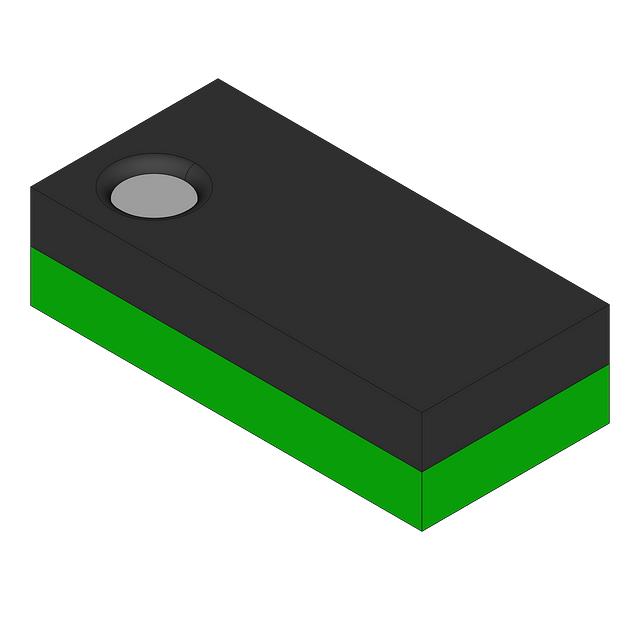
The CM1426-04CP is a four-channel EMI filter circuit with integrated ESD protection, manufactured by onsemi. It utilizes an RC (Pi) filter topology to suppress electromagnetic interference in high-speed data lines. Each channel incorporates a capacitance of 8.5 pF and a series resistance of 100 Ohms, resulting in a cutoff frequency of 230 MHz. The device supports data rates up to 92 Mbps and operates within a temperature range of -40°C to +85°C. It is housed in a compact CSP-11 package with dimensions of 1.96 mm x 1.33 mm x 0.72 mm, designed for surface-mount applications.
Verify the specific suffix (e.g., -04CP) against the official datasheet to ensure correct channel count and package type. Confirm RoHS compliance status and lead times directly with authorized distributors or onsemi. Ensure storage conditions align with moisture sensitivity levels specified in the manufacturing documentation. Cross-reference part numbers with current obsolescence notices to avoid procurement of discontinued variants.
Select this component when designing circuits requiring combined EMI filtering and ESD protection for four differential or single-ended lines. The 230 MHz cutoff frequency makes it suitable for signals below this threshold, such as audio or lower-speed digital interfaces. Consider the small CSP-11 footprint if board space is constrained. Evaluate thermal performance within the -40°C to +85°C operating range for your specific application environment.
The CM1426 belongs to onsemi's family of EMI filter circuits designed for consumer electronics. It addresses the growing need for compact protection solutions in mobile devices where space is limited. The integration of filtering and protection reduces component count and simplifies PCB layout compared to discrete solutions.
Check for direct substitutes within the CM1426 series, such as CM1426-06CP or CM1426-08CP, which offer different channel counts but similar electrical characteristics. Verify pin compatibility and package dimensions before substitution.
 CM1426-04CP
The activity of extra discounts on wholesale prices is in full swing…
Please fill in your contact information and we will send you the latest wholesale price list.