ChipApex | Global Electronic Components Supplier

SEARCH
Search Product
Search Post
— IC芯片 | 连接器 | 传感器 | 被动器件 —
Search productSearch post
— IC芯片 | 连接器 | 传感器 | 被动器件 —
Consult the customer manager about the wholesale price.
consultation hotline:86-132-6715-2157
email:[email protected]
Contact the product manager for consultation. One-stop consultation is available.
Do you want a lower wholesale price? Please send us your inquiry and we will reply immediately.
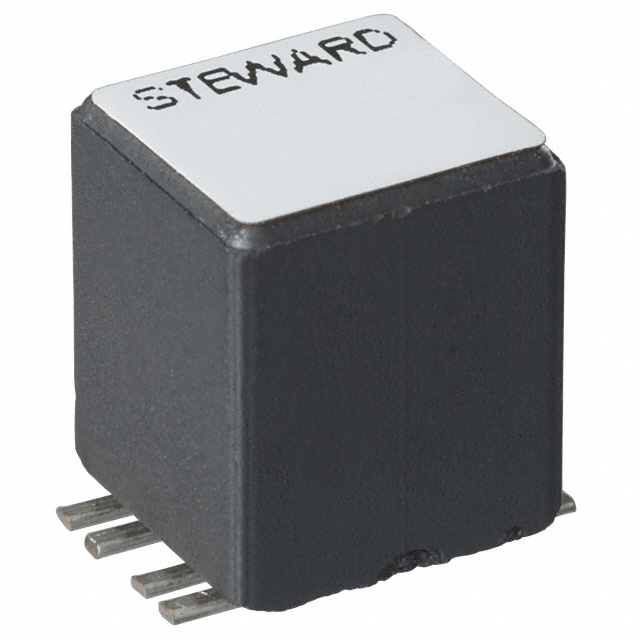
The CM3032V201R-10 is a surface-mount common mode choke manufactured by Laird-Signal Integrity Products. It features four lines and provides an impedance of 200 Ohms at 100 MHz. The component supports a maximum rated current of 8A with a maximum DC resistance (DCR) of 10 mOhms. It operates within a temperature range of -40°C to +125°C. The package dimensions are approximately 7.62mm in length, 3.20mm in width, and 3.90mm in height, utilizing vertical flat leads for PCB mounting.
Verify the specific suffix designation during procurement, as it may indicate variations in compliance status or packaging compared to legacy versions. Confirm RoHS compliance requirements against project specifications, as older variants may differ. Ensure the selected distributor sources from authorized channels to guarantee component authenticity and traceability. Cross-reference the manufacturer part number with official datasheets to confirm electrical parameters match design needs before finalizing orders.
Select this component when designing circuits requiring four-channel common mode filtering with high current handling capabilities. The 200 Ohm impedance at 100 MHz makes it suitable for suppressing electromagnetic interference in digital signal lines. Consider the physical footprint and lead configuration for PCB layout constraints. Evaluate thermal performance under continuous 8A load conditions to ensure reliable operation within the specified temperature range.
This component belongs to the CM series of common mode chokes from Laird-Signal Integrity Products. It shares design characteristics with other V-series parts like the CM4732V201R-10, differing primarily in the number of lines and physical dimensions. The series is engineered for robust EMI suppression in dense electronic assemblies, offering a balance between electrical performance and space efficiency for modern surface-mount technologies.
Direct substitute: CM3032V201R-00. Verify compatibility regarding environmental compliance standards, as suffix changes may reflect regulatory updates rather than functional differences.
 CM3032V201R-10

The activity of extra discounts on wholesale prices is in full swing…
Please fill in your contact information and we will send you the latest wholesale price list.