 ChipApex | Global Electronic Components Supplier
SEARCH
Search Product
Search Post
— IC芯片 | 连接器 | 传感器 | 被动器件 —
Search productSearch post
— IC芯片 | 连接器 | 传感器 | 被动器件 —
Consult the customer manager about the wholesale price.
consultation hotline:86-132-6715-2157
email:[email protected]
Contact the product manager for consultation. One-stop consultation is available.
Do you want a lower wholesale price? Please send us your inquiry and we will reply immediately.
The CMKZ5228B TR is a surface mount triple isolated silicon Zener diode from the Central Semiconductor CMKZ5221B series, packaged in an ULTRAmini SOT-363 case. It contains three independent Zener diodes with a nominal voltage of 3.9 V (range 3.705 V to 4.095 V) at a test current of 20 mA. Maximum dynamic impedance is 23 Ω at IZT and 1900 Ω at IZK. The maximum reverse current is 10 μA at 1.0 V, with a temperature coefficient of -0.060 %/°C. Each diode supports a power dissipation of 200 mW at 25°C, operating within a junction temperature range of -65°C to +150°C.
This component has been officially transitioned to End of Life status by Central Semiconductor Corp. No new production units are available; only existing stock may be sourced. Last purchase orders were accepted six months after the notice date, with final shipments occurring twelve months post-notice. Verification of remaining inventory availability through authorized distributors or direct manufacturer contact is required before procurement planning.
Designers should verify that the SOT-363 package dimensions and pinout configuration match the target PCB layout constraints. The thermal resistance of 625 °C/W necessitates careful consideration of board space and airflow to maintain junction temperatures within the specified -65°C to +150°C range during operation. Ensure the circuit design accounts for the specific test currents and impedance values listed in the electrical characteristics table.
The CMKZ5228B TR belongs to the CMKZ5221B through CMKZ5261B series of triple isolated silicon Zener diodes manufactured by Central Semiconductor Corp. This series utilizes the ULTRAmini SOT-363 surface mount case to provide three independent voltage regulation channels in a compact footprint. The product line was discontinued as part of the company's ongoing product management process due to declining customer demand.
No replacement part numbers are available for this component. The official documentation indicates 'N/A, Stock Only' for all variants in the series, confirming that no alternate Central Semiconductor devices serve as direct substitutes.
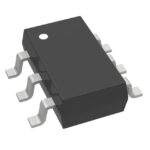 CMKZ5228B TR
The activity of extra discounts on wholesale prices is in full swing…
Please fill in your contact information and we will send you the latest wholesale price list.




