 ChipApex | Global Electronic Components Supplier

SEARCH
Search Product
Search Post
— IC芯片 | 连接器 | 传感器 | 被动器件 —
Search productSearch post
— IC芯片 | 连接器 | 传感器 | 被动器件 —
Consult the customer manager about the wholesale price.
consultation hotline:86-132-6715-2157
email:[email protected]
Contact the product manager for consultation. One-stop consultation is available.
Do you want a lower wholesale price? Please send us your inquiry and we will reply immediately.
CMX683D4 is listed in the Telecom range at ChipApex. The manufacturer field lists CML Micro. Its product description is IC TELECOM INTERFACE 16SOIC. Review the specifications below when checking this part for your BOM.
The CMX683D4 is a Call Progress and Voice Detector manufactured by CML Microcircuits. It operates within a supply voltage range of 2.7V to 5.5V, consuming 1µA in standby mode and typically 0.6mA at 3.0V during active operation. The device detects single and dual call progress tones within the 315Hz to 650Hz band and identifies non-call progress signals such as voice or music via VOICE FAST and VOICE SLOW outputs. It utilizes a 3.58MHz crystal oscillator for accurate timing and features a SOIC-16 package with an operating temperature range of -40°C to +85°C.
Verify the specific suffix 'D4' corresponds to the SOIC-16 package variant when sourcing. Confirm that the component meets RoHS compliance requirements if applicable to your manufacturing standards. Ensure the host microcontroller interface logic levels are compatible with the CMOS outputs provided by this detector IC.
Select the CMX683D4 when a surface-mount SOIC-16 package is required for space-constrained designs. Choose this part over DIP or TSSOP variants based on PCB layout constraints and assembly capabilities. Consider the low power consumption characteristics suitable for battery-operated telecom devices requiring long standby periods.
The CMX683 series includes multiple package options to accommodate different design needs. The CMX683P1 denotes the DIP package version, while the CMX683E4 represents the TSSOP package variant. All versions share identical electrical performance and functional specifications, differing only in physical footprint and pin configuration.
CMX683E4 (TSSOP Package)
It uses stochastic signal processing techniques that analyze signal frequency, duration, and amplitude. It checks if the signal profile matches international call progress standards or if it resembles speech, music, or noise.
The CONFIG pin determines the clock source. Leaving it unconnected enables the internal 3.58MHz crystal oscillator. Connecting it to VDD enables the external clock input on the CLOCK IN pin.
Yes, both can be at logic 1 simultaneously. The host microcontroller must use cadence information to determine the actual signal state, as the device may detect call progress characteristics followed by voice activity.
Explore related parts through Interface, Integrated Circuits (ICs), all product categories, ChipApex homepage.
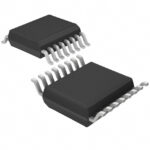 CMX683D4

The activity of extra discounts on wholesale prices is in full swing…
Please fill in your contact information and we will send you the latest wholesale price list.







