 ChipApex | Global Electronic Components Supplier
SEARCH
Search Product
Search Post
— IC芯片 | 连接器 | 传感器 | 被动器件 —
Search productSearch post
— IC芯片 | 连接器 | 传感器 | 被动器件 —
Consult the customer manager about the wholesale price.
consultation hotline:86-132-6715-2157
email:[email protected]
Contact the product manager for consultation. One-stop consultation is available.
Do you want a lower wholesale price? Please send us your inquiry and we will reply immediately.
The CMX868AD2-TR1K is a low-power V.22 bis modem integrated circuit manufactured by CML Microcircuits, designed for telephone-based information and telemetry systems. It supports multiple standards including V.22 bis (2400/2400 bps QAM), V.22/Bell 212A (1200/1200 or 600/600 bps DPSK), V.23 (1200/75, 1200/1200, 75/1200 bps FSK), Bell 202 (1200/150, 1200/1200, 150/1200 bps FSK), and V.21/Bell 103 (300/300 bps FSK). The device operates on a single 2.7V to 5.5V supply over a temperature range of -40°C to +85°C. It features an integrated DTMF encoder/decoder, programmable Tx/Rx USARTs compliant with V.14, flexible line driver/receive hybrid circuits, a hook switch relay drive output, and a ring detector. Control and data transfer are managed via a high-speed serial C-BUS interface compatible with most microcontrollers.
Verify the specific package variant required, as the base model CMX868A is available in TSSOP, SOIC, and DIP packages. Confirm the suffix 'TR1K' indicates tape and reel packaging containing 1000 units per reel, distinct from tube packaging options. Ensure the design accounts for the component's moisture sensitivity level and reflow soldering profile appropriate for surface-mount assembly.
Select this component when a multi-standard analog modem solution is needed for voice-grade telephone lines. It is suitable for applications requiring simultaneous support for various FSK, DPSK, and QAM modulation schemes within a single IC. Consider the integrated DTMF capabilities and low-power standby mode if battery operation or energy efficiency is a priority for the end product.
The CMX868AD2-TR1K belongs to the CMX868A family of low-power V.22 bis modems from CML Microcircuits. This family is engineered for robust performance in noisy telephone environments. The AD2 suffix typically denotes a specific package type and temperature grade, while the TR1K suffix specifies the reel quantity for automated manufacturing processes.
Direct replacements within the same family include other variants of the CMX868A series differing primarily in package style (e.g., CMX868AE2 for TSSOP) rather than functional changes. Verify pin compatibility and thermal characteristics when substituting between different package types such as SOIC versus TSSOP.
The device includes programmable Tx and Rx USARTs that meet V.14 requirements. They can be configured to transmit and receive asynchronous Start-Stop characters or synchronous 8-bit words, allowing flexibility for unformatted data handling.
Powersave mode disables most internal circuitry to reduce power consumption. However, the C-BUS interface and the Ring Detector remain active, allowing the device to detect incoming calls or line voltage reversals and generate an interrupt to wake up the host microcontroller.
Yes. In addition to standard DTMF encoding and decoding, the DTMF/Tone Generator and Detectors can be programmed to transmit and detect user-specific single or dual-tone signals, call progress signals, or modem calling and answering tones.
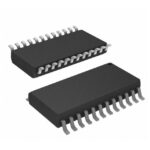 CMX868AD2-TR1K
The activity of extra discounts on wholesale prices is in full swing…
Please fill in your contact information and we will send you the latest wholesale price list.





