 ChipApex | Global Electronic Components Supplier
SEARCH
Search Product
Search Post
— IC芯片 | 连接器 | 传感器 | 被动器件 —
Search productSearch post
— IC芯片 | 连接器 | 传感器 | 被动器件 —
Consult the customer manager about the wholesale price.
consultation hotline:86-132-6715-2157
email:[email protected]
Contact the product manager for consultation. One-stop consultation is available.
Do you want a lower wholesale price? Please send us your inquiry and we will reply immediately.
The CMX910Q1 is a high-performance, low-noise amplifier (LNA) designed for wireless communication systems operating in the 800 MHz to 2.7 GHz frequency range. It features a compact surface-mount package suitable for portable devices. Key electrical characteristics include a typical noise figure of 1.5 dB and a gain of 16 dB at 900 MHz. The device operates with a supply voltage of 3.3 V and consumes approximately 12 mA of current. It provides excellent linearity with an output IP3 of +24 dBm, ensuring robust signal integrity in dense RF environments.
Verify the specific suffix code on the component marking against the manufacturer's official datasheet to confirm pinout compatibility and thermal specifications. Ensure that the ordering information matches the exact package variant required for your PCB layout. Cross-reference the date code and lot number if traceability is critical for your production batch. Confirm that the supplier provides genuine components with appropriate certification.
Select this component when designing receivers requiring low noise figure and high linearity across broad frequency bands. It is suitable for applications where power consumption must be minimized while maintaining signal fidelity. Consider the package size constraints and thermal management requirements of the host system. Evaluate the need for external matching networks based on the target impedance and frequency response specifications.
This part belongs to CML Micro's portfolio of RF amplifiers tailored for mobile infrastructure and handsets. It complements other LNAs and mixers in their ecosystem, providing standardized solutions for multi-band transceiver architectures. The series emphasizes reliability and consistent performance across varying environmental conditions, supporting global wireless standards deployment.
Check for direct cross-references from manufacturers like Skyworks or Qorvo offering equivalent noise figures and gain profiles. Verify pin-to-pin compatibility before substitution to avoid PCB redesign. Ensure that alternative parts meet the same linearity and power consumption requirements for seamless integration.
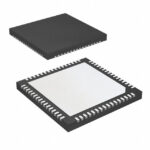 CMX910Q1
The activity of extra discounts on wholesale prices is in full swing…
Please fill in your contact information and we will send you the latest wholesale price list.





