 ChipApex | Global Electronic Components Supplier
SEARCH
Search Product
Search Post
— IC芯片 | 连接器 | 传感器 | 被动器件 —
Search productSearch post
— IC芯片 | 连接器 | 传感器 | 被动器件 —
Consult the customer manager about the wholesale price.
consultation hotline:86-132-6715-2157
email:[email protected]
Contact the product manager for consultation. One-stop consultation is available.
Do you want a lower wholesale price? Please send us your inquiry and we will reply immediately.
The COM8018 is a multifunction peripheral device manufactured by SMSC, designed for embedded systems requiring integrated communication and control interfaces. It operates within an industrial temperature range of -40°C to +85°C and supports a supply voltage between 3.0 V and 3.6 V, with a nominal rating of 3.3 V. The component utilizes CMOS technology and is housed in a 64-pin Plastic Quad Flat Package (PQFP) with a 10 mm x 10 mm footprint and 0.5 mm pin pitch. It functions as a single-function unit with no external data bus width specified in the provided documentation.
Verify the specific package variant and revision level against the manufacturer's current datasheet before procurement. Ensure that the 3.3 V supply requirements are met by the target system design. Confirm compatibility with the intended PCB layout for the PQFP64 package dimensions. Check for any lead-free or RoHS compliance markings if required by regulatory standards. Validate that the industrial temperature range meets the operational environment specifications.
Select this component when a compact, low-voltage multifunction peripheral is needed for embedded processing tasks. Consider the PQFP64 package constraints for board space and thermal management. Evaluate the need for industrial temperature tolerance compared to commercial grade alternatives. Assess the integration benefits against using discrete components for similar functionality. Verify interface compatibility with the host microcontroller or processor.
The COM8018 belongs to the family of embedded processors and controllers produced by SMSC. It serves as a specialized peripheral solution rather than a general-purpose CPU. Its design focuses on integrating multiple communication protocols into a single chip to reduce system complexity. This positions it alongside other SMSC networking and interface controllers aimed at embedded market segments.
No verified public substitute part numbers are available for direct replacement. Consult SMSC documentation for potential obsolescence notices or recommended upgrades. Cross-reference pinouts and electrical characteristics carefully if considering alternative vendors. Verify functional equivalence regarding supported protocols and interface speeds.
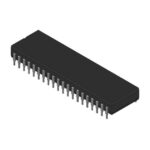 COM8018
The activity of extra discounts on wholesale prices is in full swing…
Please fill in your contact information and we will send you the latest wholesale price list.