 ChipApex | Global Electronic Components Supplier
SEARCH
Search Product
Search Post
— IC芯片 | 连接器 | 传感器 | 被动器件 —
Search productSearch post
— IC芯片 | 连接器 | 传感器 | 被动器件 —
Consult the customer manager about the wholesale price.
consultation hotline:86-132-6715-2157
email:[email protected]
Contact the product manager for consultation. One-stop consultation is available.
Do you want a lower wholesale price? Please send us your inquiry and we will reply immediately.
The COP8CDR9HVA8/NOPB is an 8-bit CMOS Flash microcontroller from the COP8 family, featuring 32 kbytes of Flash program memory and 1 kbyte of volatile RAM. It integrates a 10-bit Analog-to-Digital Converter with up to 16 channels, two USARTs, and three timers. The device supports dual clock operation with a high-speed oscillator up to 10 MHz and a low-speed oscillator at 32.768 kHz. Operating voltage ranges from 2.7V to 5.5V for industrial temperatures (-40°C to +85°C) and 4.5V to 5.5V for extended temperatures (-40°C to +125°C). It lacks a Brownout Reset feature.
Verify component authenticity through authorized Texas Instruments distributors or certified suppliers. Confirm the specific suffix matches the required package and temperature range. Check current production status as legacy components may have limited availability or end-of-life implications. Ensure handling procedures account for ESD sensitivity during storage and installation.
Select this model when 32 kbytes of Flash memory and multiple analog inputs are required within an 8-bit architecture. Choose the COP8CDR9 variant specifically if Brownout Reset functionality is not needed for the application design. Consider the available package options such as PLCC, WQFN, or TSSOP based on board space constraints. Verify that the operating voltage range aligns with the system power supply specifications.
This component belongs to the COP8CBR9/COP8CCR9/COP8CDR9 series of 8-bit CMOS Flash microcontrollers. The CDR9 designation indicates the absence of a Brownout Reset feature compared to the CBR9 and CCR9 variants. All members share the same core architecture, memory size, and peripheral set, differing primarily in voltage thresholds and temperature ratings.
Direct pin-compatible replacements within the same family include COP8CBR9 and COP8CCR9, provided the absence of Brownout Reset in the CDR9 does not impact system reliability. Cross-family migration requires architectural review due to differences in instruction sets and peripheral configurations.
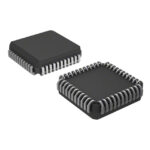 COP8CDR9HVA8/NOPB
The activity of extra discounts on wholesale prices is in full swing…
Please fill in your contact information and we will send you the latest wholesale price list.






