 ChipApex | Global Electronic Components Supplier
SEARCH
Search Product
Search Post
— IC芯片 | 连接器 | 传感器 | 被动器件 —
Search productSearch post
— IC芯片 | 连接器 | 传感器 | 被动器件 —
Consult the customer manager about the wholesale price.
consultation hotline:86-132-6715-2157
email:[email protected]
Contact the product manager for consultation. One-stop consultation is available.
Do you want a lower wholesale price? Please send us your inquiry and we will reply immediately.
The COP8SCR9HLQ8 is an 8-bit microcontroller from the COP8 family, manufactured by National Semiconductor (now Texas Instruments). It features a CMOS architecture with on-chip Flash memory and operates at a maximum clock frequency of 20 MHz. The device is housed in a 44-lead Plastic Quad Flatpack (PQCC) package. Key integrated peripherals include two analog comparators, a full-duplex USART, three multi-function 16-bit timer/counters with PWM capabilities, and MICROWIRE/PLUS interface support. It supports a supply voltage range of 2.7V to 5.5V and includes power-saving HALT/IDLE modes.
Verify the specific suffix 'LQ8' against official National Semiconductor/Texas Instruments documentation to confirm pinout, temperature grade, and package variant. Ensure compatibility with existing development tools such as EPROM emulators or programmers designed for the COP8SG/SR family. Confirm RoHS compliance status if required for your manufacturing process, as older stock may vary.
Select this component when an 8-bit controller with integrated analog comparators and USART is required. It is suitable for designs needing up to 32k bytes of program memory and 512 bytes of RAM. Consider the PQCC44 package size constraints and the 2.7V to 5.5V operating voltage range during schematic design. Evaluate if the 20 MHz maximum clock speed meets the real-time processing requirements of the target application.
This part belongs to the COP8SG/SR family of 8-bit CMOS microcontrollers. These devices are known for high integration, combining CPU core, memory, and peripheral functions on a single chip. The family is designed for cost-sensitive applications requiring robust performance with minimal external components. National Semiconductor was acquired by Texas Instruments, which continues to support the lineage through compatible successors or legacy management.
Check for direct form-fit-function replacements within the COP8SGx7 series or COP8SRx7 series. Verify if newer Texas Instruments equivalents exist that maintain binary compatibility. Ensure any substitute matches the 44-pin PQCC package dimensions and electrical specifications.
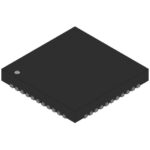 COP8SCR9HLQ8
The activity of extra discounts on wholesale prices is in full swing…
Please fill in your contact information and we will send you the latest wholesale price list.





