 ChipApex | Global Electronic Components Supplier

SEARCH
Search Product
Search Post
— IC芯片 | 连接器 | 传感器 | 被动器件 —
Search productSearch post
— IC芯片 | 连接器 | 传感器 | 被动器件 —
Consult the customer manager about the wholesale price.
consultation hotline:86-132-6715-2157
email:[email protected]
Contact the product manager for consultation. One-stop consultation is available.
Do you want a lower wholesale price? Please send us your inquiry and we will reply immediately.
The CR8349-1500 is a current sense transformer from the CR8300 series by CR Magnetics Inc. It features a non-invasive solid core design with a 1500:1 current ratio and a maximum input current range of 75 Arms. The device operates within a frequency range of 20Hz to 1kHz and has a DC resistance (DCR) of 80 Ohms. It supports a maximum RMS voltage of 15.5 V and utilizes through-hole mounting with PC pin termination. Physical dimensions include a 0.35-inch inner diameter opening, measuring 1.024 inches in length, 0.670 inches in width, and up to 1.102 inches in height.
Verify the specific suffix requirements against the manufacturer's latest datasheet to ensure correct packaging and terminal configuration. Confirm that the 75 Arms rating aligns with peak load conditions in the target application. Check RoHS compliance status if environmental regulations apply to the end product. Ensure the 20Hz minimum frequency requirement does not conflict with low-frequency operational scenarios.
Select this component when a high-isolation, non-invasive current measurement solution is required for AC signals between 20Hz and 1kHz. The 1500:1 ratio provides significant signal attenuation, making it suitable for interfacing with low-voltage microcontroller ADCs or op-amp circuits. Consider the 80 Ohm secondary resistance when designing burden resistor networks to maintain linearity within the 75 Arms limit.
This part belongs to the CR8300 series of general-purpose vertical PCB current transformers. It shares the same physical footprint and mounting style as variants like the CR8349-1000-N and CR8349-2500-N, differing primarily in turns ratio and current handling capacity. The series is designed for robust industrial environments requiring reliable galvanic isolation.
Direct substitutes within the same series include the CR8349-1000-N and CR8349-2500-N. These alternatives offer different current ratios (1000:1 and 2500:1 respectively) and DCR values (32 Ohms and unspecified in snippet but implied different). Verify that the alternative ratio matches the system's signal conditioning requirements before substitution.
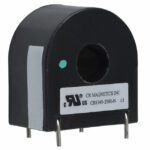 CR8349-1500

The activity of extra discounts on wholesale prices is in full swing…
Please fill in your contact information and we will send you the latest wholesale price list.





