 ChipApex | Global Electronic Components Supplier
SEARCH
Search Product
Search Post
— IC芯片 | 连接器 | 传感器 | 被动器件 —
Search productSearch post
— IC芯片 | 连接器 | 传感器 | 被动器件 —
Consult the customer manager about the wholesale price.
consultation hotline:86-132-6715-2157
email:[email protected]
Contact the product manager for consultation. One-stop consultation is available.
Do you want a lower wholesale price? Please send us your inquiry and we will reply immediately.
The CRO2400A-LF is a surface mount voltage-controlled oscillator (VCO) manufactured by Z-Communications, Inc., designed for the 2.4 GHz ISM band. It operates with a center frequency of 2400 MHz and a narrow tuning range of 2399 to 2401 MHz. The device delivers a typical output power of +4 dBm ±2 dBm and exhibits a second harmonic suppression of -12 dBc. It requires a nominal supply voltage of 5 V and accepts a tuning voltage input between 0.1 V and 16 V. The module utilizes a microstrip topology and is housed in a compact package suitable for space-constrained RF applications.
Verify that the specific order suffix matches the required pinout and tolerance specifications, as variations may exist within the product family. Confirm that the supply voltage requirements align with the system's 5 V rail before integration. Ensure proper grounding techniques are applied during installation to maintain phase noise performance and stability. Review the manufacturer's application notes regarding soldering profiles to prevent thermal damage to the internal components.
Select this component when a fixed-center frequency VCO with minimal tuning range is required for cost-sensitive designs. The narrow bandwidth simplifies loop filter design in PLL systems compared to octave-tuning alternatives. Consider the output power level to determine if additional amplification is necessary for the target application. Evaluate the physical dimensions against the available PCB real estate constraints.
This part belongs to Z-Communications' CRO series of voltage-controlled oscillators, which are engineered for high-reliability RF applications. The series includes various models covering different frequency bands from 1 GHz to over 3 GHz. These components are typically used in communication systems requiring stable frequency sources with low phase noise characteristics.
Direct substitutes include other 2.4 GHz VCOs from Z-Communications such as the CRO2400B-LF, provided the tuning range and pinout compatibility are verified. Cross-brand replacements require careful evaluation of phase noise, output power, and control voltage linearity to ensure system performance parity.
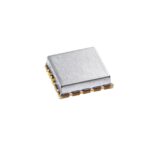 CRO2400A-LF
The activity of extra discounts on wholesale prices is in full swing…
Please fill in your contact information and we will send you the latest wholesale price list.





