ChipApex | Global Electronic Components Supplier

SEARCH
Search Product
Search Post
— IC芯片 | 连接器 | 传感器 | 被动器件 —
Search productSearch post
— IC芯片 | 连接器 | 传感器 | 被动器件 —
Consult the customer manager about the wholesale price.
consultation hotline:86-132-6715-2157
email:[email protected]
Contact the product manager for consultation. One-stop consultation is available.
Do you want a lower wholesale price? Please send us your inquiry and we will reply immediately.
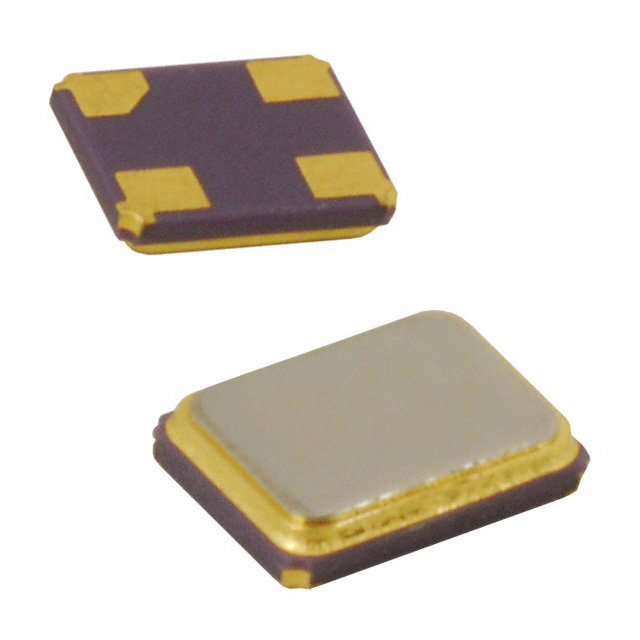
The NDK CS00561-24M is a surface-mount MHz crystal designed for precise frequency control in electronic circuits. It operates at a nominal frequency of 24 MHz with a frequency tolerance and stability of ±10 ppm. The component features a load capacitance of 10 pF and an equivalent series resistance (ESR) of 100 Ohms. It utilizes a 4-SMD, No Lead package with dimensions of 2.50 mm in length, 2.00 mm in width, and a maximum height of 0.50 mm. The device supports fundamental mode operation and functions within a temperature range of -40°C to +85°C.
Verify the specific suffix codes against official NDK documentation to ensure correct packaging and specifications. Confirm that the intended application environment falls within the specified -40°C to +85°C operating range. Check for RoHS compliance status if required by project standards. Ensure ESR matching with the oscillator circuit is validated during design. Review moisture sensitivity level handling procedures prior to assembly.
Select this component when a 24 MHz reference is required with tight ±10 ppm stability. The 10 pF load capacitance must match the host oscillator circuit requirements. Consider the 100 Ohm ESR value for drive level sensitivity. The small 2.50 x 2.00 mm footprint aids in dense board designs. Verify thermal performance meets system constraints within the rated temperature limits.
This part belongs to NDK's line of surface-mount crystals, offering reliable timing solutions for digital electronics. It complements other frequencies in the series, providing standardized options for common clocking needs. The NX2016SA series designation indicates its physical form factor and mounting style, ensuring compatibility with automated pick-and-place manufacturing processes.
Direct substitutes include other 24 MHz SMD crystals with identical 10 pF load capacitance and similar dimensional profiles. Verify ESR values close to 100 Ohms to maintain circuit stability. Cross-reference pinout and footprint compatibility before substitution. Ensure frequency tolerance matches or exceeds the original ±10 ppm requirement.
 CS00561-24M

The activity of extra discounts on wholesale prices is in full swing…
Please fill in your contact information and we will send you the latest wholesale price list.