 ChipApex | Global Electronic Components Supplier

SEARCH
Search Product
Search Post
— IC芯片 | 连接器 | 传感器 | 被动器件 —
Search productSearch post
— IC芯片 | 连接器 | 传感器 | 被动器件 —
Consult the customer manager about the wholesale price.
consultation hotline:86-132-6715-2157
email:[email protected]
Contact the product manager for consultation. One-stop consultation is available.
Do you want a lower wholesale price? Please send us your inquiry and we will reply immediately.
The CST25-1000 is a current sense transformer from Triad Magnetics designed for high-frequency applications. It features a 1:1000 turns ratio and supports a maximum operating current of 25 A with an output current of 25 mA. The device operates within a frequency range of 50 kHz to 500 kHz and has a primary impedance of 50 Ohms. It includes a built-in sense winding for ease of use and provides high isolation voltages, specifically a high potential of 4000 VAC. The component is rated for temperatures between -40°C and +100°C and utilizes through-hole mounting with PC pins.
Verify the specific datasheet version when sourcing, as manufacturer documentation may be updated. Confirm that the through-hole package and PC pin lead style match your PCB layout requirements. Ensure the operating temperature range of -40°C to +100°C aligns with your environmental conditions. Cross-reference the 4000 VAC isolation rating against your safety standards. Check for any recent changes in the CST25 series specifications before finalizing procurement.
Select this component when precise current monitoring is required in high-frequency environments up to 500 kHz. The 1:1000 ratio suits applications needing accurate signal representation of primary currents. Consider the 25 A maximum current limit and 25 mA output capability for circuit design compatibility. The through-hole mounting style dictates PCB assembly methods. Evaluate the thermal performance within the specified temperature range for long-term reliability in your specific application context.
The CST25-1000 belongs to Triad Magnetics' CST25 series of current sense transformers. This series is engineered for detecting current passing through conductors in various electronic systems. The components are noted for their reliability and effective operation in demanding electrical environments. The series generally focuses on providing isolated current sensing solutions for modern power electronics.
Public confirmed substitute part numbers are not available in the provided documentation. Verify compatibility with existing circuit designs if considering alternatives from other manufacturers. Ensure any replacement matches the 1:1000 ratio, frequency range, and isolation requirements.
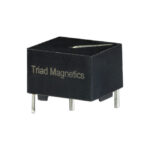 CST25-1000

The activity of extra discounts on wholesale prices is in full swing…
Please fill in your contact information and we will send you the latest wholesale price list.





