 ChipApex | Global Electronic Components Supplier

SEARCH
Search Product
Search Post
— IC芯片 | 连接器 | 传感器 | 被动器件 —
Search productSearch post
— IC芯片 | 连接器 | 传感器 | 被动器件 —
Consult the customer manager about the wholesale price.
consultation hotline:86-132-6715-2157
email:[email protected]
Contact the product manager for consultation. One-stop consultation is available.
Do you want a lower wholesale price? Please send us your inquiry and we will reply immediately.
The CST306-3T is a high-frequency current sense transformer from Triad Magnetics, designed for non-invasive current measurement in power electronics. It features a solid core construction with a turns ratio of 200:1 and a rated primary current of 25 A. The device operates within a frequency range of 20 kHz to 200 kHz, ensuring accurate signal fidelity for switching applications. Key electrical specifications include a maximum DC resistance of 3.75 Ohms and an inductance of 55 mH. It utilizes PC pin termination for through-hole mounting, with physical dimensions of 17.53 mm length, 9.78 mm width, and a maximum height of 23.24 mm.
Verify the specific suffix designation when ordering, as variants such as CST306-3T-B exist within the product line. Confirm that the required current rating and frequency response align with the system's operational parameters. Ensure the through-hole PC pin termination style matches the target PCB layout. Cross-reference the manufacturer part number against official distributor catalogs to avoid confusion with similar series components like the CST206.
Select this component when a 25 A primary current rating and a 200:1 turns ratio are required for isolated current sensing. The 55 mH inductance supports stable operation at frequencies up to 200 kHz. Consider the physical footprint of 17.53 mm by 9.78 mm for board space constraints. This model is suitable for applications demanding reliable performance under high-frequency switching conditions without invasive shunt resistors.
The CST306-3T belongs to the CST series of high-frequency current sense transformers manufactured by Triad Magnetics. This series is engineered for robust performance in demanding power conversion environments. The component represents a standard solution for galvanic isolation between high-current primary circuits and low-voltage secondary sensing electronics, facilitating safe and accurate feedback control.
The CST306-3T-B is a documented variant within the same product family. Verify if the suffix change impacts functional specifications or packaging before substitution. No other direct cross-model replacements are confirmed in public documentation.
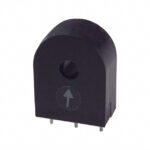 CST306-3T

The activity of extra discounts on wholesale prices is in full swing…
Please fill in your contact information and we will send you the latest wholesale price list.





