 ChipApex | Global Electronic Components Supplier
SEARCH
Search Product
Search Post
— IC芯片 | 连接器 | 传感器 | 被动器件 —
Search productSearch post
— IC芯片 | 连接器 | 传感器 | 被动器件 —
Consult the customer manager about the wholesale price.
consultation hotline:86-132-6715-2157
email:[email protected]
Contact the product manager for consultation. One-stop consultation is available.
Do you want a lower wholesale price? Please send us your inquiry and we will reply immediately.
The CTX210655-R is a discontinued surface-mount CCFL transformer manufactured by Eaton Electronics. It features a dual primary winding and a single secondary winding configuration, designed for board-mounted applications. The component has a power rating of 2.5 VA, with a primary voltage rating of 20 V and a secondary voltage rating of 1.34 kV. Its physical dimensions are 26 mm in length, 16.5 mm in width, and 7.1 mm in height.
This component is officially discontinued and no longer manufactured by Eaton Electronics. Availability is limited to existing stock from third-party distributors or surplus channels. Verification of part authenticity and storage conditions is critical when sourcing obsolete inventory. Direct procurement from the manufacturer is not possible. Buyers should confirm lead times and return policies carefully due to the non-standard supply chain status of this end-of-life product.
Designers must consider the discontinuation status when selecting this transformer for new products. Alternative components within the same Eaton CCFL series or comparable specialty transformers should be evaluated for long-term supply stability. The specific electrical parameters, including the 1.34 kV secondary output and 2.5 VA rating, dictate its suitability for particular lighting loads. Space constraints defined by the 26x16.5x7.1 mm footprint must align with the target PCB layout requirements.
The CTX210655-R belongs to the CCFL transformer family produced by Eaton Electronics' division. This series was engineered for specialized lighting applications requiring isolated high-voltage generation. The part number suffix typically denotes specific electrical characteristics within the broader product line. As an SMD component, it facilitated automated assembly processes for compact electronic devices during its active production lifecycle.
Publicly confirmed substitute part numbers are not available in the provided documentation. The CTX210652-R, CTX210657-R, and CTX210659-R are listed in related datasheets but their electrical compatibility requires independent verification against specific design requirements.
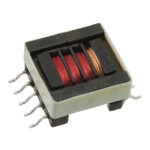 CTX210655-R
The activity of extra discounts on wholesale prices is in full swing…
Please fill in your contact information and we will send you the latest wholesale price list.





