ChipApex | Global Electronic Components Supplier
SEARCH
Search Product
Search Post
— IC芯片 | 连接器 | 传感器 | 被动器件 —
Search productSearch post
— IC芯片 | 连接器 | 传感器 | 被动器件 —
Consult the customer manager about the wholesale price.
consultation hotline:86-132-6715-2157
email:[email protected]
Contact the product manager for consultation. One-stop consultation is available.
Do you want a lower wholesale price? Please send us your inquiry and we will reply immediately.
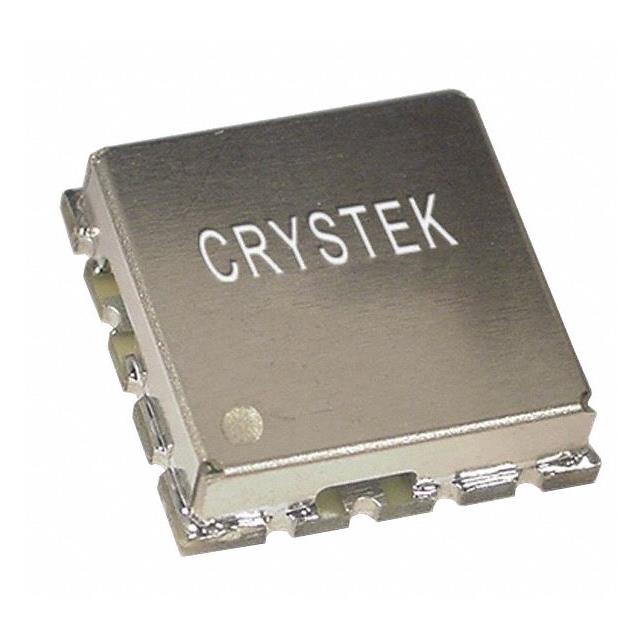
The CVCO55BE-2110-2170 is a voltage-controlled oscillator from Crystek Corporation operating within the 2110 MHz to 2170 MHz frequency range. It features a tuning voltage of 0.3 V to 4.7 V and delivers an output power of approximately 3 dBm. The device operates on a 5 V supply with a maximum current consumption of 28 mA. It utilizes a 16-QFN package measuring 12.7 mm x 12.7 mm. Typical phase noise is -107 dBc/Hz, with second harmonic suppression at -15 dBc. The unit functions reliably across a temperature range of -40°C to 85°C.
Verify the exact part number against official Crystek documentation to ensure compatibility with system requirements. Confirm that the 16-QFN package dimensions align with PCB layout constraints. Check for RoHS compliance status if environmental regulations apply to your project. Ensure the supplier provides valid traceability documents. Validate that the tuning voltage range matches your control circuit capabilities before finalizing procurement.
Select this component when a fixed frequency range between 2110 MHz and 2170 MHz is required. Consider the 16-QFN package size for space-constrained designs. Evaluate the -107 dBc/Hz phase noise specification against system sensitivity needs. Verify that the 5 V supply voltage is compatible with existing power rails. Assess the thermal performance within the -40°C to 85°C operating range for your specific environment.
This model belongs to the CVCO55 series of voltage-controlled oscillators manufactured by Crystek Corporation. The series offers various frequency options tailored for different applications. The CVCO55BE-2110-2170 specifically targets the 2.11–2.17 GHz segment. It shares common design characteristics with other models in the family, such as similar packaging and supply requirements, but differs in its specific frequency parameters.
Direct substitutes include CVCO55BE-2130-2220 and CVCO55BE-1750-2150 from the same manufacturer. These alternatives offer different frequency ranges while maintaining similar package and electrical characteristics. Verify frequency compatibility before substitution. Cross-reference datasheets to ensure pinout and thermal specifications remain identical.
 CVCO55BE-2110-2170
The activity of extra discounts on wholesale prices is in full swing…
Please fill in your contact information and we will send you the latest wholesale price list.