ChipApex | Global Electronic Components Supplier
SEARCH
Search Product
Search Post
— IC芯片 | 连接器 | 传感器 | 被动器件 —
Search productSearch post
— IC芯片 | 连接器 | 传感器 | 被动器件 —
Consult the customer manager about the wholesale price.
consultation hotline:86-132-6715-2157
email:[email protected]
Contact the product manager for consultation. One-stop consultation is available.
Do you want a lower wholesale price? Please send us your inquiry and we will reply immediately.
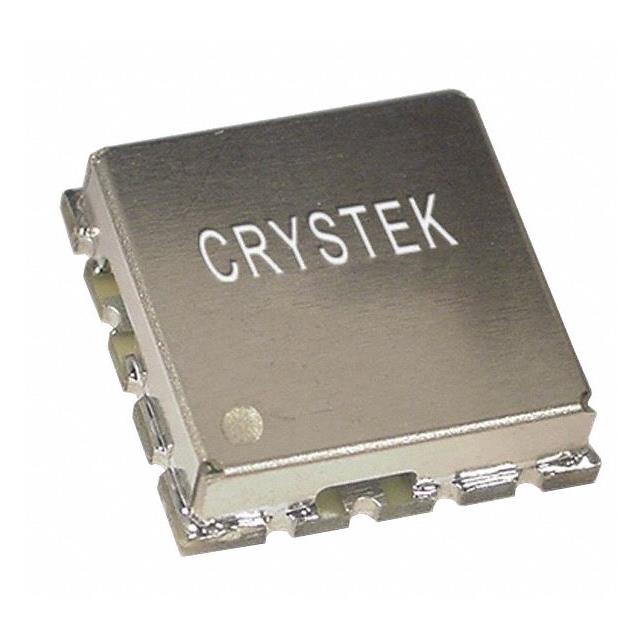
The CVCO55CL-0467-0493 is a surface-mount voltage-controlled oscillator (VCO) from Crystek Corporation, designed for narrow-band applications. It operates within a frequency range of 467 MHz to 493 MHz. The device features a compact SMD package measuring 0.50 inches square (12.7 x 12.7 mm). It supports a load capacitance of 100 pF and utilizes RoHS-compliant manufacturing processes. This component is part of the CVCO55CL series, which emphasizes low phase noise and low harmonics for high-performance RF signal generation.
Verify the exact frequency tolerance and control voltage specifications against the official Crystek datasheet before integration. Ensure that the PCB layout accommodates the 12.7 x 12.7 mm footprint and provides adequate thermal relief for the SMD package. Confirm RoHS compliance status if required by your supply chain regulations. Cross-reference the pinout diagram with your schematic to prevent connection errors during assembly.
Select this model when a narrow tuning range between 467 MHz and 493 MHz is required. It is suitable for designs prioritizing low phase noise over wideband agility. Consider the 100 pF load capacitance requirement for impedance matching networks. Compare against wider band alternatives like the CVCO55CW series if broader frequency coverage is needed instead of spectral purity.
This component belongs to the CVCO55 family, specifically the CL variant designated for narrow-band operations. The series includes options for high frequency (BE), ultra-high frequency (BH), and coaxial resonator (CC) configurations. The CVCO55CL series distinguishes itself by offering reduced harmonic content and enhanced stability compared to standard broadband VCOs, making it ideal for specialized RF applications.
Direct substitutes include other CVCO55CL models with different frequency ranges, such as CVCO55CL-0470-0520, provided the frequency shift is acceptable. For wider bandwidth needs, consider the CVCO55CW series. Ensure any replacement maintains the same SMD footprint and electrical interface compatibility to avoid PCB redesign.
 CVCO55CL-0467-0493
The activity of extra discounts on wholesale prices is in full swing…
Please fill in your contact information and we will send you the latest wholesale price list.