 ChipApex | Global Electronic Components Supplier
SEARCH
Search Product
Search Post
— IC芯片 | 连接器 | 传感器 | 被动器件 —
Search productSearch post
— IC芯片 | 连接器 | 传感器 | 被动器件 —
Consult the customer manager about the wholesale price.
consultation hotline:86-132-6715-2157
email:[email protected]
Contact the product manager for consultation. One-stop consultation is available.
Do you want a lower wholesale price? Please send us your inquiry and we will reply immediately.
The CY7B992-2JC is a programmable skew clock buffer from the RoboClock family, manufactured by Cypress Semiconductor. It features an integrated phase-locked loop (PLL) architecture that provides zero input-to-output delay and aligns output clocks in both phase and frequency with a reference input. The device offers eight CMOS outputs arranged in four user-controllable pairs, capable of driving terminated transmission lines with impedances as low as 50Ω. Key specifications include an operating frequency range of 3.75 MHz to 80 MHz, typical output pair skew of less than 100 ps, and peak-to-peak jitter under 200 ps. It supports selectable skew up to ±18 ns, frequency division by two or four, and multiplication by two or four.
Verify the specific suffix 'JC' against the manufacturer's ordering guide to confirm package type and temperature grade. Confirm RoHS compliance status as older revisions may vary. Check for end-of-life status given the component's age. Ensure the source document matches the datasheet revision *E or later for accurate electrical characteristics.
Select the CY7B992 variant specifically for CMOS logic level outputs; the CY7B991 provides TTL levels. Choose the '-2' speed grade for tighter skew specifications (<250 ps max) compared to '-5' or '-7' grades. Ensure the system operates within the 5V ±10% supply voltage range. Verify that the required frequency range falls within the capabilities defined by the FS pin configuration.
This component belongs to the Cypress RoboClock series of programmable skew clock buffers. It is functionally similar to the CY7B991 but differs in output logic levels (CMOS vs. TTL). The part number indicates a commercial temperature grade and a specific package variant. It is designed to replace discrete clock buffering solutions by integrating PLL, skew adjustment, and fanout capabilities into a single 32-pin PLCC/LCC package.
Public confirmed substitute part numbers are not available in the provided documentation. Consider checking for newer generations from Infineon (post-Cypress acquisition) or equivalent devices from IDT (e.g., QS5992) which are noted as pin-compatible in some contexts, though verification of electrical parameters is required.
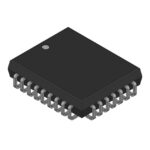 CY7B992-2JC
The activity of extra discounts on wholesale prices is in full swing…
Please fill in your contact information and we will send you the latest wholesale price list.







