 ChipApex | Global Electronic Components Supplier
SEARCH
Search Product
Search Post
— IC芯片 | 连接器 | 传感器 | 被动器件 —
Search productSearch post
— IC芯片 | 连接器 | 传感器 | 被动器件 —
Consult the customer manager about the wholesale price.
consultation hotline:86-132-6715-2157
email:[email protected]
Contact the product manager for consultation. One-stop consultation is available.
Do you want a lower wholesale price? Please send us your inquiry and we will reply immediately.
The CY7C68000-56LFXC is a USB 2.0 UTMI transceiver manufactured by Infineon Technologies (formerly Cypress Semiconductor). It operates at 3.3V with an ambient temperature range of 0°C to +70°C. The device supports High Speed (480 Mbps) and Full Speed (12 Mbps) signaling, excluding Low Speed. It features an internal 24-MHz oscillator circuit requiring an external parallel-resonant crystal. The component provides serial-to-parallel and parallel-to-serial conversion via an 8-bit (60 MHz) or 16-bit (30 MHz) parallel interface. It includes internal impedance terminations and a 1.5k-ohm pull-up on DPLUS. The package is a 56-pin QFN.
Verify the manufacturer origin, as Infineon acquired Cypress Semiconductor. Confirm the specific suffix '56LFXC' corresponds to the lead-free 56-pin QFN package variant. Check for RoHS compliance status relative to current environmental regulations. Ensure the source document matches the official datasheet revision *H or later for accurate pin definitions and electrical characteristics.
Select this component when a dedicated USB physical layer transceiver is required to offload analog complexity from a digital ASIC. It is suitable for designs needing a standard UTMI interface with configurable bus widths. Consider the thermal requirements of the QFN package and ensure PCB layout guidelines for impedance control are followed. Verify that the host controller supports the required 30 MHz or 60 MHz clock frequencies.
This part belongs to the EZ-USB TX2 family of USB 2.0 transceivers. It was originally developed by Cypress Semiconductor Corporation before being acquired by Infineon Technologies. The device serves as a bridge between the USB serial bus and parallel digital interfaces, allowing system designers to integrate high-speed USB capabilities without designing complex analog circuits.
The CY7C68000-56LFXCT is the tape-and-reel version of the same component. Other variants in the family include the 56-pin SSOP packages such as CY7C68000-56PVC and CY7C68000-56PVXC. Direct functional substitutes may exist within the broader USB transceiver market, but pin compatibility must be verified.
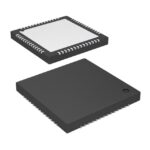 CY7C68000-56LFXC
The activity of extra discounts on wholesale prices is in full swing…
Please fill in your contact information and we will send you the latest wholesale price list.







