 ChipApex | Global Electronic Components Supplier
SEARCH
Search Product
Search Post
— IC芯片 | 连接器 | 传感器 | 被动器件 —
Search productSearch post
— IC芯片 | 连接器 | 传感器 | 被动器件 —
Consult the customer manager about the wholesale price.
consultation hotline:86-132-6715-2157
email:[email protected]
Contact the product manager for consultation. One-stop consultation is available.
Do you want a lower wholesale price? Please send us your inquiry and we will reply immediately.
The CY8C24223A-24PVXIT is an 8-bit microcontroller from the Infineon PSoC 1 family, featuring the M8C processor core with speeds up to 24 MHz. It integrates 4 KB of Flash program storage and 256 bytes of SRAM data memory. The device includes four digital PSoC blocks and six analog PSoC blocks, supporting configurable peripherals such as ADCs, DACs, timers, and communication interfaces like I2C, SPI, and UART. Operating voltage ranges from 2.4 V to 5.25 V, with extended operation down to 1.0 V using the on-chip switch-mode pump. It supports industrial temperature ranges from -40 °C to +85 °C.
Verify the ordering suffix PVXIT corresponds to the SSOP-20 package and reel/tape packaging format as specified in official Infineon documentation. Confirm that the component meets RoHS compliance standards required for your assembly process. Ensure compatibility with PSoC Designer development tools for firmware integration. Check for any specific handling instructions related to moisture sensitivity level during storage and soldering.
Select this component when a highly configurable mixed-signal controller is needed within a compact SSOP-20 package. It is suitable for applications requiring both analog signal processing and digital control logic without external components. Consider the 4 KB Flash and 256 B SRAM limits for code size and data storage needs. Evaluate the availability of necessary user modules in the design software for required peripherals.
This part belongs to the CY8C24x23A series of PSoC 1 devices, derived from the earlier CY8C24x23 family. It shares architectural similarities with other members like the CY8C24123A and CY8C24423A, differing primarily in pin count and specific resource allocation. The series emphasizes low power consumption and high integration levels for cost-sensitive embedded applications.
Direct substitutes within the same package and pinout include other CY8C24x23A variants such as CY8C24123A or CY8C24423A, provided their memory and I/O configurations meet application requirements. Verify electrical characteristics and software compatibility before substitution.
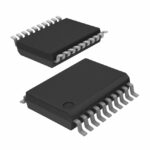 CY8C24223A-24PVXIT
The activity of extra discounts on wholesale prices is in full swing…
Please fill in your contact information and we will send you the latest wholesale price list.







