 ChipApex | Global Electronic Components Supplier
SEARCH
Search Product
Search Post
— IC芯片 | 连接器 | 传感器 | 被动器件 —
Search productSearch post
— IC芯片 | 连接器 | 传感器 | 被动器件 —
Consult the customer manager about the wholesale price.
consultation hotline:86-132-6715-2157
email:[email protected]
Contact the product manager for consultation. One-stop consultation is available.
Do you want a lower wholesale price? Please send us your inquiry and we will reply immediately.
The CY8C24423A5-24PVXI is a programmable system-on-chip from the Cypress Semiconductor PSoC 1 family, designed for mixed-signal applications. It integrates an M8C 8-bit core with configurable analog and digital peripherals on a single die. The device features 32KB of flash memory and 2KB of RAM, operating at speeds up to 24MHz within a voltage range of 2.4V to 5.25V. It includes a 10-bit ADC, multiple communication interfaces such as I2C, SPI, and UART, and supports CapSense technology for touch sensing. Packaged in a 32-pin QFN format, it operates between -40°C and +85°C.
Verify the exact suffix '5' against official Cypress documentation, as standard listings often use 'A'. Confirm package type matches the required 32-pin QFN form factor. Ensure the operating temperature range meets environmental specifications. Cross-reference the manufacturer part number with Infineon resources following the acquisition of Cypress Semiconductor to ensure supply chain accuracy.
Select this component when a mixed-signal solution combining an 8-bit MCU with programmable analog blocks is required. It is suitable for designs needing USB connectivity and touch sensing without external chips. Compare pin counts and peripheral availability against other PSoC 1 variants like the CY8C24xxx series to ensure sufficient I/O and memory for the specific application requirements.
This part belongs to the PSoC 1 CY8C24xxx series, which focuses on mixed-signal integration. Unlike standard microcontrollers, PSoC devices allow hardware configuration via software tools. This series is distinct from the CY8C21xxx (lower performance) and CY8C29xxx (higher performance with more peripherals) families, offering a balance of cost and functionality for mid-range embedded applications.
Check for direct substitutes within the CY8C24423A family with different suffixes indicating package or temperature variations. Consider the CY8C24223A or CY8C24123A if reduced pin count or memory is acceptable. Verify compatibility with existing firmware due to potential differences in peripheral configurations.
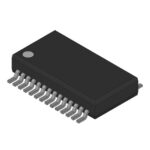 CY8C24423A5-24PVXI
The activity of extra discounts on wholesale prices is in full swing…
Please fill in your contact information and we will send you the latest wholesale price list.





