 ChipApex | Global Electronic Components Supplier
SEARCH
Search Product
Search Post
— IC芯片 | 连接器 | 传感器 | 被动器件 —
Search productSearch post
— IC芯片 | 连接器 | 传感器 | 被动器件 —
Consult the customer manager about the wholesale price.
consultation hotline:86-132-6715-2157
email:[email protected]
Contact the product manager for consultation. One-stop consultation is available.
Do you want a lower wholesale price? Please send us your inquiry and we will reply immediately.
The CY8C3245AXA-154 is an 8-bit microcontroller based on the Infineon PSOC™ 3 architecture, utilizing an 8051 core. It features 32 kB of Flash program memory and 4 kB of SRAM data storage. The device supports a maximum clock frequency of 50 MHz and operates within a voltage range of 1.71 V to 5.5 V. It includes one 12-bit Delta-Sigma ADC, one 8-bit DAC, and 62 general-purpose I/O pins. Connectivity options include I2C, UART, and Full-Speed USB interfaces. The component is housed in a 100-TQFP package and functions across a temperature range of -40 °C to +85 °C.
Verify the specific suffix designation against official Infineon documentation to confirm pinout compatibility and thermal characteristics. Ensure that the selected variant matches the required package type and operating temperature range for the intended application environment. Cross-reference the datasheet revision history to confirm current manufacturing status and recommended usage guidelines before finalizing procurement decisions.
Select this component when an 8051-compatible core is required alongside significant analog flexibility. The inclusion of a Delta-Sigma ADC and DAC allows for precise signal conditioning without external components. Consider the 62 available GPIOs and USB interface for complex peripheral management. Evaluate the 100-TQFP package constraints against board space limitations and thermal dissipation requirements during the design phase.
This part belongs to the PSOC™ 3 family, designed for applications needing mixed-signal processing. It combines a standard 8051 CPU with configurable analog blocks and digital interconnects. The series emphasizes low power consumption and high integration levels, reducing bill-of-materials complexity by replacing multiple discrete components with a single programmable chip solution.
Consult official Infineon substitution guides for verified alternatives within the PSOC™ 3 or PSOC™ 4 families. Direct pin-to-pin replacements may require firmware adaptation due to architectural differences between 8051 and ARM-based cores. Verify equivalent memory sizes and peripheral counts before implementing any substitute part number.
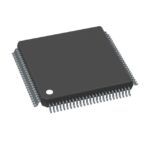 CY8C3245AXA-154
The activity of extra discounts on wholesale prices is in full swing…
Please fill in your contact information and we will send you the latest wholesale price list.







