 ChipApex | Global Electronic Components Supplier
SEARCH
Search Product
Search Post
— IC芯片 | 连接器 | 传感器 | 被动器件 —
Search productSearch post
— IC芯片 | 连接器 | 传感器 | 被动器件 —
Consult the customer manager about the wholesale price.
consultation hotline:86-132-6715-2157
email:[email protected]
Contact the product manager for consultation. One-stop consultation is available.
Do you want a lower wholesale price? Please send us your inquiry and we will reply immediately.
The CY8CMBR3110-SX2IT is a register-configurable capacitive touch controller from the CY8CMBR3xxx family, designed for human-machine interfaces without firmware development. It supports up to 10 capacitive sensing inputs and operates within a supply voltage range of 1.71 V to 5.5 V. The device features an I2C interface supporting speeds up to 400 kHz and includes General-Purpose Outputs (GPOs) for direct LED driving or buzzer control. It utilizes SmartSense Auto-tuning and CSD PLUS algorithms to ensure high noise immunity and liquid tolerance across an industrial temperature range of -40 °C to +85 °C.
Verify the specific suffix 'SX2IT' against the manufacturer's official ordering guide to confirm package type and reel specifications. Ensure compatibility with I2C bus requirements and check humidity sensitivity handling procedures for surface-mount assembly processes.
Select this model when exactly ten capacitive sensing channels are required. Compare against the CY8CMBR3108 for eight-channel needs or the CY8CMBR3116 for sixteen-channel applications. Confirm that the SOIC-16 package fits the PCB layout constraints and that the host processor supports the necessary I2C communication protocol.
This component belongs to the CY8CMBR3xxx CapSense Express family, which provides register-configurable capacitive sensing controllers. The family shares common core technologies like CSD PLUS sensing and SmartSense Auto-tuning but varies in the number of supported sensors and specific output features.
Direct functional replacements within the same package include other variants from the CY8CMBR3xxx series such as the CY8CMBR3108 or CY8CMBR3116, provided the pinout and feature set align with the design requirements. Verify register map compatibility if migrating between different channel counts.
No, the CY8CMBR3110 is a register-configurable controller that eliminates the need for firmware development. Features are configured via the I2C interface using tools like the EZ-Click Customizer.
The average current consumption is 22 µA per sensor at a 120-ms refresh interval.
It offers liquid tolerance by locking up the user interface in firmware to prevent false touches from water droplets, mist, or streaming water, especially when shield electrodes are enabled.
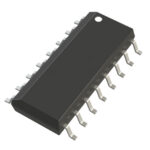 CY8CMBR3110-SX2IT
The activity of extra discounts on wholesale prices is in full swing…
Please fill in your contact information and we will send you the latest wholesale price list.





