ChipApex | Global Electronic Components Supplier

SEARCH
Search Product
Search Post
— IC芯片 | 连接器 | 传感器 | 被动器件 —
Search productSearch post
— IC芯片 | 连接器 | 传感器 | 被动器件 —
Consult the customer manager about the wholesale price.
consultation hotline:86-132-6715-2157
email:[email protected]
Contact the product manager for consultation. One-stop consultation is available.
Do you want a lower wholesale price? Please send us your inquiry and we will reply immediately.
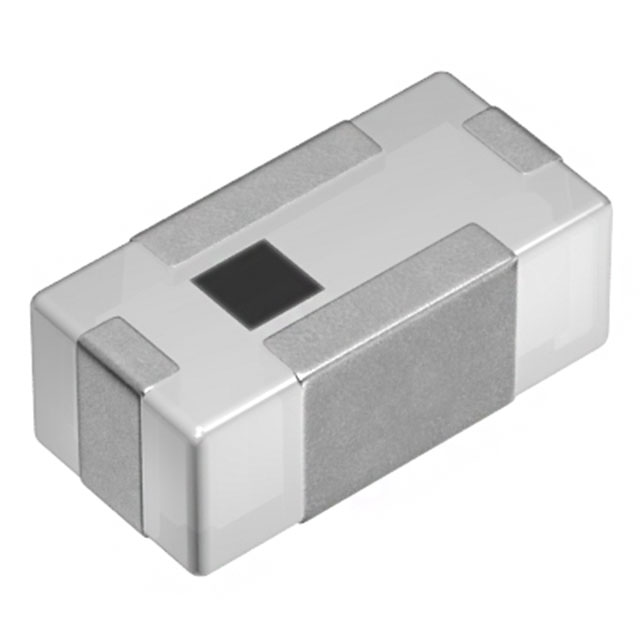
The TDK DEA162450BT-1295A1 is a multilayer ceramic bandpass filter designed for RF applications. It operates with a center frequency of 2.45 GHz and a bandwidth of 100 MHz, covering the 2400 to 2500 MHz range. The component features a nominal impedance of 50 ohms and exhibits insertion loss values ranging from 1.8 dB to 1.95 dB depending on specific documentation sources. It is housed in a surface-mount 0603 (1608 metric) package with four terminals. The device supports an operating temperature range from -40°C to +85°C and complies with RoHS3 standards.
Verify the exact insertion loss specification against the latest manufacturer datasheet, as public sources cite varying values between 1.8 dB and 1.95 dB. Confirm that the 0603 package dimensions align with your PCB land pattern requirements. Ensure the component meets the required thermal operating range for your specific environment. Check for any recent product change notifications or end-of-life notices associated with this part number before finalizing procurement plans.
Select this component when a compact, high-Q bandpass filter is required for the 2.4 GHz ISM band. The 0603 package size makes it suitable for dense PCB layouts where larger filters cannot fit. Consider the specific insertion loss tolerance of 1.8 dB to 1.95 dB for link budget calculations. This filter is appropriate for applications requiring rejection of out-of-band signals while maintaining signal integrity within the 2400-2500 MHz window.
This part belongs to TDK's DEA series of LTCC bandpass filters, which are engineered for RF front-end applications. The series offers various center frequencies and bandwidths tailored for different wireless standards. The DEA162450BT-1295A1 specifically targets the crowded 2.4 GHz spectrum, providing necessary isolation for co-located wireless technologies. It represents a standard solution for manufacturers designing compliant wireless communication hardware.
Publicly confirmed substitute part numbers are not available in the provided source material. Designers should consult TDK directly for equivalent components or verify if alternative DEA series variants meet the same electrical and mechanical specifications.
 DEA162450BT-1295A1

The activity of extra discounts on wholesale prices is in full swing…
Please fill in your contact information and we will send you the latest wholesale price list.