 ChipApex | Global Electronic Components Supplier
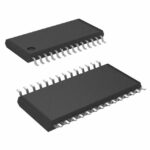
DG506BEQ-T1-GE3
Search Product
Search Post
— IC芯片 | 连接器 | 传感器 | 被动器件 —
Search productSearch post
— IC芯片 | 连接器 | 传感器 | 被动器件 —
Consult the customer manager about the wholesale price.
consultation hotline:86-132-6715-2157
email:[email protected]
Contact the product manager for consultation. One-stop consultation is available.
Do you want a lower wholesale price? Please send us your inquiry and we will reply immediately.
The DG506BEQ-T1-GE3 is a precision 16-channel single-ended CMOS analog multiplexer manufactured by Vishay Siliconix. It connects one of sixteen inputs to a common output using a 4-bit binary address (A0-A3). The device operates with single or dual power supplies, supporting voltage ranges from ±5 V to ±20 V or up to 44 V absolute maximum rating. Key electrical parameters include a maximum on-resistance of 300 Ω at room temperature and 400 Ω across the full temperature range (-40 °C to +125 °C). It features ultra-low charge injection of 1 pC, low leakage current of 1 nA, and an off-isolation of -85 dB at 1 MHz. The component utilizes break-before-make switching to prevent crosstalk and includes an enable function for stacking multiple devices.
Verify the specific package suffix 'EQ' corresponds to the 28-lead TSSOP format required for your PCB layout. Confirm that the 'GE3' suffix indicates compliance with current RoHS standards before finalizing orders. Ensure the ordering quantity aligns with the manufacturer's standard reel packaging specifications to avoid handling discrepancies.
Select this component when a single-ended 16:1 multiplexing configuration is required rather than the differential 8:1 dual configuration offered by the DG507B variant. Consider the 28-lead TSSOP package dimensions if space constraints preclude the use of SOIC or PLCC packages. Verify that the 300 Ω on-resistance meets the signal integrity requirements of your specific application circuit.
This part belongs to the DG506B/DG507B series, which are fabricated on an enhanced SG-II CMOS process. This technology reduces charge injection, lowers device leakage, and minimizes parasitic capacitance compared to previous generations. The series serves as a superior alternative to legacy parts such as the ADG506A and HI-506, offering improved ruggedness and wider supply ranges.
Publicly confirmed substitutes listed in official documentation include the ADG506A, DG506A, and HI-506. Note that these are legacy counterparts; verify pin compatibility and parameter differences before implementation.
The DG506B is a 16-channel single-ended analog multiplexer, whereas the DG507B is a dual 8-channel differential analog multiplexer.
The Enable function allows the user to reset the multiplexer to all switches off, which facilitates the stacking of several devices in a system.
It prevents momentary crosstalk between adjacent channels by ensuring the old connection is broken before the new one is made.
 DG506BEQ-T1-GE3
The activity of extra discounts on wholesale prices is in full swing…
Please fill in your contact information and we will send you the latest wholesale price list.