 ChipApex | Global Electronic Components Supplier

SEARCH
Search Product
Search Post
— IC芯片 | 连接器 | 传感器 | 被动器件 —
Search productSearch post
— IC芯片 | 连接器 | 传感器 | 被动器件 —
Consult the customer manager about the wholesale price.
consultation hotline:86-132-6715-2157
email:[email protected]
Contact the product manager for consultation. One-stop consultation is available.
Do you want a lower wholesale price? Please send us your inquiry and we will reply immediately.
The DM74ALS574ASJ is an octal D-type edge-triggered flip-flop manufactured by onsemi, belonging to the 74ALS logic family. It features eight non-inverting outputs with three-state capability, housed in a 20-pin SOP package. The device operates within a supply voltage range of 4.5V to 5.5V and supports a maximum clock frequency of 35 MHz. Key electrical parameters include a propagation delay of 14ns at 5V with 50pF load, output currents of -2.6mA (high) and 24mA (low), and a static current of 18mA. It functions reliably across a commercial temperature range of 0°C to 70°C.
Verify component authenticity through authorized distributors or direct manufacturer channels due to potential availability constraints. Confirm specific ordering suffixes match exact package and tape specifications required for surface-mount assembly processes. Ensure compliance with relevant environmental directives such as RoHS and REACH before integration into final products.
Select this component when high-speed operation within the ALS family is required alongside standard TTL compatibility. Consider the three-state output feature for bus-oriented designs where multiple devices share common data lines. Evaluate power consumption requirements against the 18mA static current specification compared to lower-power alternatives like HC series variants.
This part belongs to the National Semiconductor 74ALS574 line, now produced under the onsemi brand following corporate acquisitions. It represents a standard octal flip-flop solution widely used in legacy and modern digital logic designs requiring reliable data latching capabilities.
Direct substitutes include SN74ALS574BDWR and SN74ALS574BNSR from Texas Instruments. Verify pinout compatibility and electrical parameter alignment before replacing the discontinued unit in existing designs.
The outputs are non-inverting, meaning the Q output follows the D input state upon clock triggering without logical inversion.
Yes, it features three-state outputs controlled by an enable input, allowing multiple devices to share a common data bus effectively.
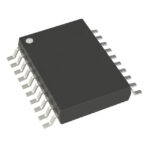 DM74ALS574ASJ

The activity of extra discounts on wholesale prices is in full swing…
Please fill in your contact information and we will send you the latest wholesale price list.





