 ChipApex | Global Electronic Components Supplier

SEARCH
Search Product
Search Post
— IC芯片 | 连接器 | 传感器 | 被动器件 —
Search productSearch post
— IC芯片 | 连接器 | 传感器 | 被动器件 —
Consult the customer manager about the wholesale price.
consultation hotline:86-132-6715-2157
email:[email protected]
Contact the product manager for consultation. One-stop consultation is available.
Do you want a lower wholesale price? Please send us your inquiry and we will reply immediately.
The DM74LS112AM is a dual JK negative edge-triggered flip-flop manufactured by Fairchild Semiconductor. It features two independent logic elements within a 16-lead Small Outline Integrated Circuit (SOIC) package, specifically JEDEC MS-012 with a 0.300-inch width. The device operates on a standard 5V supply voltage, ranging from 4.75V to 5.25V. It supports a commercial temperature range of 0°C to 70°C. Key electrical characteristics include asynchronous preset and clear inputs that are independent of the clock signal, allowing direct control over output states.
Verify the specific ordering suffix against the manufacturer's current datasheet to confirm package type and environmental compliance. Ensure the component matches the required SOIC-16 footprint and pin configuration. Cross-reference the date code and lot number with quality documentation. Confirm that the asynchronous input logic levels align with the system design requirements before integration.
Select this component when dual independent JK functionality is required in a compact surface-mount format. Consider the negative edge-triggering characteristic for timing synchronization. Evaluate the propagation delay specifications against the system clock speed. Compare power consumption and noise immunity against other logic families if operating in sensitive environments.
This device belongs to the 74LS series of TTL logic integrated circuits, known for balanced performance between speed and power dissipation. The DM prefix typically denotes a specific manufacturing line or variant within Fairchild's portfolio. As a legacy component, it serves as a foundational building block for classic digital design architectures and compatibility with older system standards.
Equivalent parts include the SN74LS112 from Texas Instruments and the MC74LS112P from ON Semiconductor. Verify pinout compatibility and electrical parameter tolerances before substitution. Check for any differences in input capacitance or output drive strength that might affect signal integrity in high-speed designs.
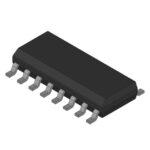 DM74LS112AM

The activity of extra discounts on wholesale prices is in full swing…
Please fill in your contact information and we will send you the latest wholesale price list.





