ChipApex | Global Electronic Components Supplier
SEARCH
Search Product
Search Post
— IC芯片 | 连接器 | 传感器 | 被动器件 —
Search productSearch post
— IC芯片 | 连接器 | 传感器 | 被动器件 —
Consult the customer manager about the wholesale price.
consultation hotline:86-132-6715-2157
email:[email protected]
Contact the product manager for consultation. One-stop consultation is available.
Do you want a lower wholesale price? Please send us your inquiry and we will reply immediately.
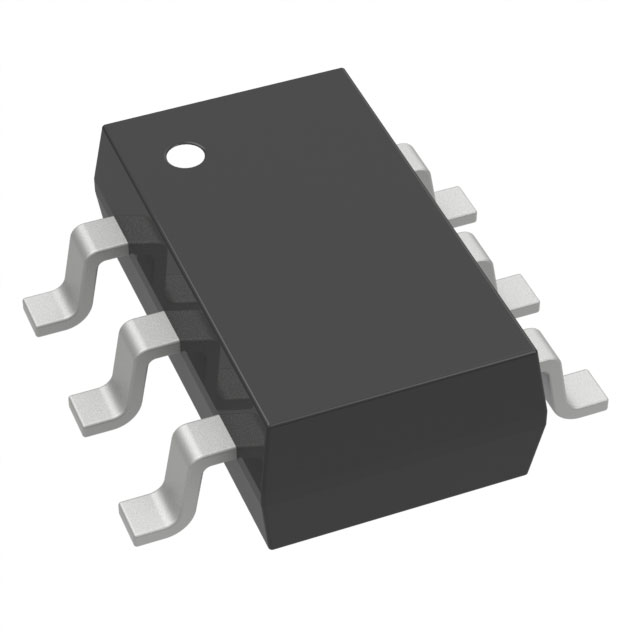
The DMC266040R is a dual NPN pre-biased digital transistor manufactured by Panasonic Electronic Components. It integrates two NPN transistors with internal biasing resistors in a Mini6-G4-B surface-mount package, measuring 2.9x2.8mm. Key electrical parameters include a collector-emitter voltage (VCEO) of 50 V and a continuous collector current of 100 mA. The device features an input resistor (R1) of 10 kOhms and an emitter-base resistor (R2) of 47 kOhms. Maximum power dissipation is rated at 300 mW, with a maximum operating temperature of +150°C.
Verify component authenticity through authorized Panasonic distributors or certified suppliers. Confirm the specific ordering suffix matches the required tape-and-reel configuration. Ensure compliance with RoHS directives as indicated in official documentation. Request manufacturer datasheets to validate electrical characteristics against application requirements before finalizing procurement orders.
Select this component when dual NPN switching functionality with integrated biasing is required in a minimal footprint. The 10 kOhm input resistor suits standard logic levels, while the 50 V rating supports moderate voltage applications. Consider the 100 mA current limit and 300 mW power dissipation constraints during thermal management planning for dense PCB layouts.
This part belongs to Panasonic's series of pre-biased composite transistors designed for digital switching applications. These devices replace discrete resistor-transistor networks, reducing component count and assembly time. The Mini6 package variant offers enhanced thermal performance compared to smaller SOT-23 alternatives, suitable for industrial and consumer electronics requiring reliable signal processing.
Cross-reference with Panasonic DMC264000R for similar dual configurations, noting potential differences in polarity or resistor values. Verify pinout compatibility and electrical ratings before substituting. Consult official replacement lists for discontinued variants to ensure functional equivalence without redesigning surrounding circuitry.
 DMC266040R
The activity of extra discounts on wholesale prices is in full swing…
Please fill in your contact information and we will send you the latest wholesale price list.