ChipApex | Global Electronic Components Supplier
SEARCH
Search Product
Search Post
— IC芯片 | 连接器 | 传感器 | 被动器件 —
Search productSearch post
— IC芯片 | 连接器 | 传感器 | 被动器件 —
Consult the customer manager about the wholesale price.
consultation hotline:86-132-6715-2157
email:[email protected]
Contact the product manager for consultation. One-stop consultation is available.
Do you want a lower wholesale price? Please send us your inquiry and we will reply immediately.
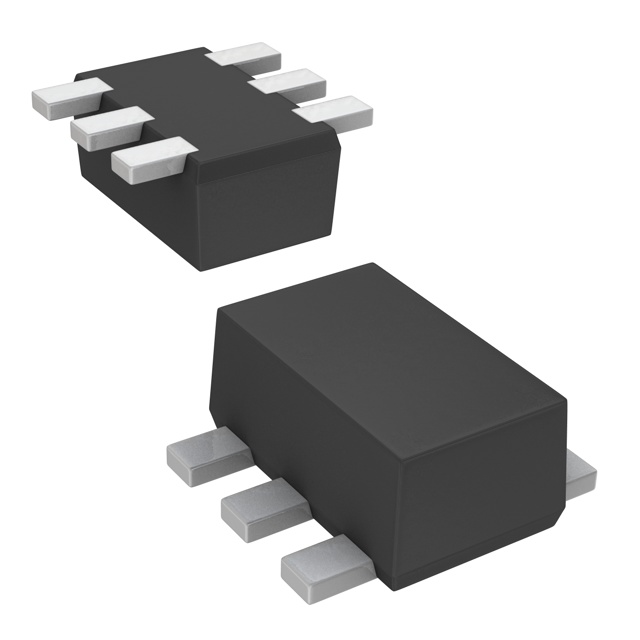
The DME914C10R is a pre-biased dual bipolar junction transistor (BJT) manufactured by Panasonic Electronic Components. It integrates an NPN transistor with a built-in bias resistor network in a compact SMini-6 surface-mount package. The device features a maximum collector current of 500mA and a transition frequency of 300MHz. Key electrical parameters include a minimum DC current gain (hFE) of 80 at 5mA/10V and up to 270 under specific conditions. This component is designed for high-speed switching applications requiring integrated base drive resistance.
Verify the exact pinout configuration against the official Panasonic datasheet before integration, as pre-biased variants may differ from standard discrete transistors. Confirm that the SMini-6 package dimensions align with your PCB footprint requirements. Ensure thermal management strategies account for the power dissipation characteristics defined in the technical specifications. Cross-reference the manufacturer's latest documentation to confirm active production status and availability constraints.
Select this component when space-constrained designs require both amplification and base drive functionality within a single package. The integrated resistor eliminates external components, reducing board area and assembly steps. Consider the 300MHz transition frequency for high-speed digital applications. Evaluate the hFE range to ensure sufficient gain for your specific load requirements. Compare against discrete alternatives if custom bias values are needed beyond the internal fixed resistance.
This part belongs to Panasonic's pre-biased transistor family, which combines standard BJT performance with integrated resistive networks. These devices streamline the design of switching and amplification stages by removing the need for external base resistors. The dual configuration allows for complementary or parallel operation within a single footprint, enhancing density in modern electronic assemblies.
It contains one NPN transistor paired with a built-in bias resistor network.
The transition frequency (fT) is specified as 300MHz.
 DME914C10R
The activity of extra discounts on wholesale prices is in full swing…
Please fill in your contact information and we will send you the latest wholesale price list.