 ChipApex | Global Electronic Components Supplier
SEARCH
Search Product
Search Post
— IC芯片 | 连接器 | 传感器 | 被动器件 —
Search productSearch post
— IC芯片 | 连接器 | 传感器 | 被动器件 —
Consult the customer manager about the wholesale price.
consultation hotline:86-132-6715-2157
email:[email protected]
Contact the product manager for consultation. One-stop consultation is available.
Do you want a lower wholesale price? Please send us your inquiry and we will reply immediately.
The DMT10H015LCG-13 is a surface-mount N-channel enhancement mode MOSFET manufactured by Diodes Incorporated. It features a V-DFN3333-8 (Type B) case with a maximum drain-source voltage of 100V and a gate-source voltage rating of ±20V. The device provides a continuous drain current of 9.4A at an ambient temperature of +25°C, increasing to 34A at a case temperature of +25°C. The static drain-source on-resistance is specified as a maximum of 15mΩ at VGS=10V and ID=20A, or 19.5mΩ at VGS=6V and ID=20A. Total power dissipation reaches 2.1W when mounted on a copper plate, with a thermal resistance junction-to-case of 4.5°C/W.
Verify the specific ordering suffix '-13' corresponds to the 3,000-unit tape and reel packaging configuration for the V-DFN3333-8 case type. Confirm compliance requirements against EU Directive 2002/95/EC (RoHS), 2011/65/EU (RoHS 2), and 2015/863/EU (RoHS 3). Ensure procurement channels are authorized to maintain product integrity and warranty coverage.
Select this component for applications requiring a balance between low conduction losses and high switching efficiency within a compact surface-mount footprint. Evaluate the thermal resistance parameters against the specific PCB copper area available for heat dissipation. Consider the gate threshold voltage characteristics relative to the driving logic levels to ensure reliable turn-on across the intended operating temperature range.
This part belongs to the DMT10 series of N-channel enhancement mode MOSFETs from Diodes Incorporated. The series utilizes the PowerDI family of packages designed for high-current density and efficient thermal management. The DMT10H015LCG variant specifically targets 100V applications where minimizing on-resistance is critical for system efficiency.
The datasheet lists DMT10H015LCG-7 as a packaging alternative offering identical electrical specifications but supplied in a 2,000-unit tape and reel format instead of the 3,000-unit configuration.
The maximum avalanche energy (EAS) is rated at 85 mJ when tested with an inductance of 3mH.
The on-resistance increases as the junction temperature rises. Typical curves show normalized resistance variation from -55°C up to +150°C under various gate drive voltages.
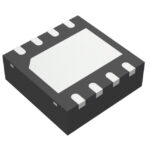 DMT10H015LCG-13
The activity of extra discounts on wholesale prices is in full swing…
Please fill in your contact information and we will send you the latest wholesale price list.





