 ChipApex | Global Electronic Components Supplier
SEARCH
Search Product
Search Post
— IC芯片 | 连接器 | 传感器 | 被动器件 —
Search productSearch post
— IC芯片 | 连接器 | 传感器 | 被动器件 —
Consult the customer manager about the wholesale price.
consultation hotline:86-132-6715-2157
email:[email protected]
Contact the product manager for consultation. One-stop consultation is available.
Do you want a lower wholesale price? Please send us your inquiry and we will reply immediately.
The DP8573AV is a CMOS real-time clock (RTC) manufactured by Texas Instruments, originally part of the National Semiconductor portfolio. It operates within a supply voltage range of 4.5 V to 5.5 V and supports parallel bus interfaces for data communication. The device provides calendar and timekeeping functions with a date format of YY-MM-DD-dd and time formats supporting both 12-hour and 24-hour modes. It includes 32 bytes of static RAM for data storage and features a backup switching mechanism to maintain operation during power transitions. The component is housed in a PLCC-28 package and is rated for industrial operating temperatures between -40°C and +85°C.
Verify the manufacturer designation, as the DP8573AV is currently produced by Texas Instruments following their acquisition of National Semiconductor components. Confirm the specific suffix 'AV' corresponds to the required temperature grade and packaging variant. Ensure compatibility with existing parallel bus designs before procurement, as this interface type is less common in modern consumer electronics.
Select this component when a parallel interface RTC is required for legacy or industrial systems. Compare against newer I2C/SPI-based RTCs if board space or pin count is constrained. Verify that the 5V logic levels match the host microcontroller's I/O specifications. Consider the PLCC-28 package availability and soldering requirements for surface mount assembly.
The DP8573A series belongs to a family of CMOS real-time clocks designed for high-reliability applications. The 'DP8573AV' specifically denotes the version with extended industrial temperature ratings and plastic leaded chip carrier packaging. This part serves as a bridge component for systems transitioning from older discrete timing solutions to integrated RTCs while maintaining parallel bus compatibility.
Direct pin-compatible replacements may be limited due to the parallel interface. Check for other parts in the DP8573A family with different suffixes for minor variations. Modern alternatives typically utilize serial interfaces (I2C/SPI), requiring schematic redesign.
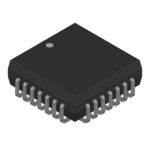 DP8573AV
The activity of extra discounts on wholesale prices is in full swing…
Please fill in your contact information and we will send you the latest wholesale price list.





