 ChipApex | Global Electronic Components Supplier
SEARCH
Search Product
Search Post
— IC芯片 | 连接器 | 传感器 | 被动器件 —
Search productSearch post
— IC芯片 | 连接器 | 传感器 | 被动器件 —
Consult the customer manager about the wholesale price.
consultation hotline:86-132-6715-2157
email:[email protected]
Contact the product manager for consultation. One-stop consultation is available.
Do you want a lower wholesale price? Please send us your inquiry and we will reply immediately.
The DRV3256AEPAPRQ1 is an automotive-grade integrated three-phase gate driver designed for 48-V brushless DC (BLDC) and induction motor applications. It features a wide supply voltage range from 5 V to 95 V and supports output currents up to 3.5 A per phase. The device operates within a temperature range of -40°C to +150°C and utilizes a 64-pin HTQFP package. Key specifications include a minimum PWM frequency of 20 kHz, dead-time control, and comprehensive protection mechanisms such as overcurrent, undervoltage lockout, and thermal shutdown.
Verify the specific suffix 'EPA' corresponds to the intended tape-and-reel packaging configuration and ensure compatibility with standard surface-mount assembly processes. Confirm that the HTQFP-64 footprint matches the target PCB design guidelines provided in the official mechanical drawings. Validate that the component meets the required automotive reliability standards for the intended application environment.
Select this component for applications requiring high-voltage isolation and precise motor control in automotive environments. Ensure the thermal management solution accommodates the maximum junction temperature of 150°C. Verify that the input logic levels are compatible with the host microcontroller or sensor interface. Consider the 3.5 A output current capability relative to the motor's rated phase current requirements.
The DRV3256AE belongs to Texas Instruments' DRV325x-Q1 family of automotive gate drivers. This series is engineered to simplify the design of three-phase motor drives by integrating high-side and low-side drivers with fault protection. The device complements other TI motor control solutions by providing reliable switching performance for high-power density applications in modern electric vehicles.
Direct substitutes within the same family include the DRV3255EPAPRQ1 and DRV3257EPAPRQ1. These alternatives share similar pinouts and functional architectures but may differ in specific current ratings or feature sets. Verify electrical parameters and thermal characteristics before substitution to ensure system compatibility.
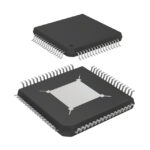 DRV3256AEPAPRQ1
The activity of extra discounts on wholesale prices is in full swing…
Please fill in your contact information and we will send you the latest wholesale price list.





